SPC Flooring Trends 2026: What Chinese Factories Are Not Telling Importers This Quarter
Published: May 26, 2026 | autoppfloor.com | Zhangjiagang, Jiangsu, China
Quick Answer
PVC resin cost climbed another 3¢/lb in May 2026 while EU PFAS compliance pressure is pushing factories to quietly downgrade formulations. Importers buying SPC flooring from China this month should lock virgin-material clauses, demand click-lock break-force reports above 1.8kN, and avoid ultra-thin 3.2mm click products for residential distribution.
DOMOTEX Asia 2026 Is Confirming One Thing: Cheap SPC Is Coming Back Hard
The Facts
According to DOMOTEX asia/CHINAFLOOR official event releases and exhibition media coverage, SPC flooring, digital printing SPC flooring, and lightweight resilient floors remain the core growth categories for 2026 Asian exports. The exhibition runs May 27–29, 2026 in Shanghai.
Factory Reality Check
From what we see inside Zhangjiagang this month, export inquiries are up around 18% compared with February, but average selling price per container is still down roughly 6–8%. Buyers from Eastern Europe and South America are chasing 4.0mm/0.3mm and even 3.5mm click products again because freight stabilized below the crazy pandemic years.
That sounds good until you look at what some factories are doing behind the curtain.
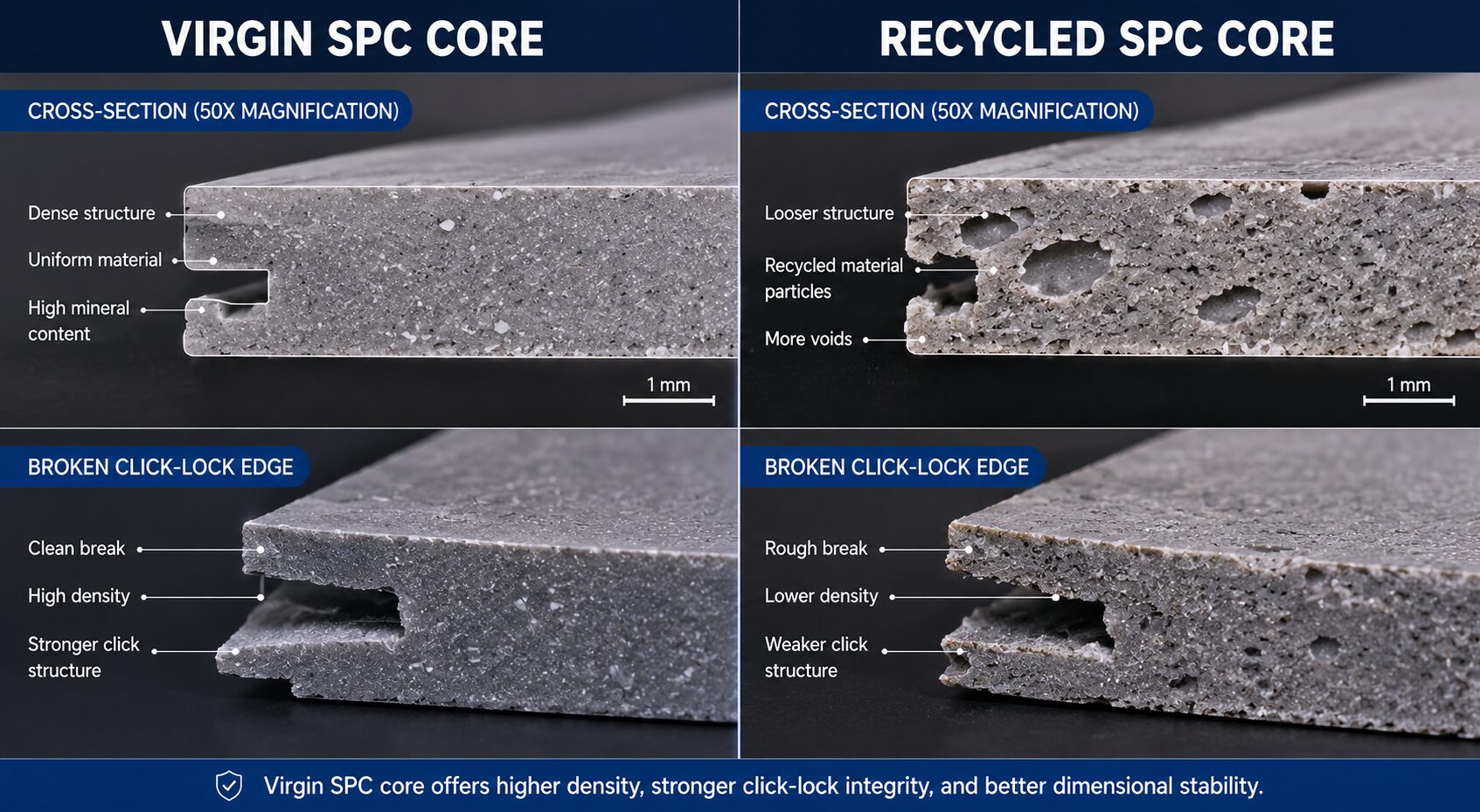
When order pressure increases and margins shrink below USD 0.35/m², many smaller plants start blending more recycled calcium powder and downgraded PVC resin into the SPC core. On paper the flooring still shows “wear layer 0.3mm.” But the real problem is brittleness around the click edge. We tested one competitor’s 4.0mm board last week. Ambient warehouse temperature was only 12°C. Locking edge fractured after 11 installation cycles.
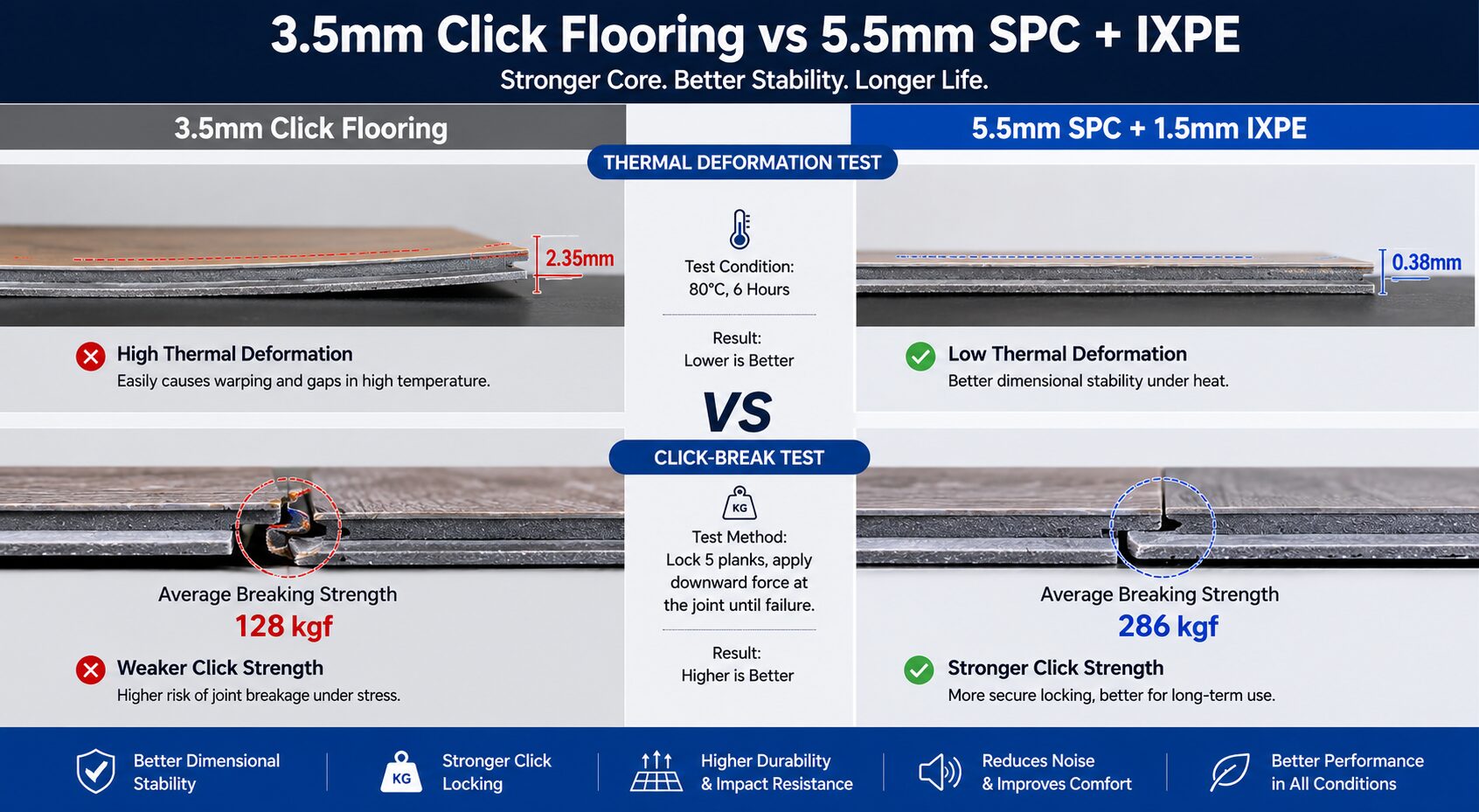
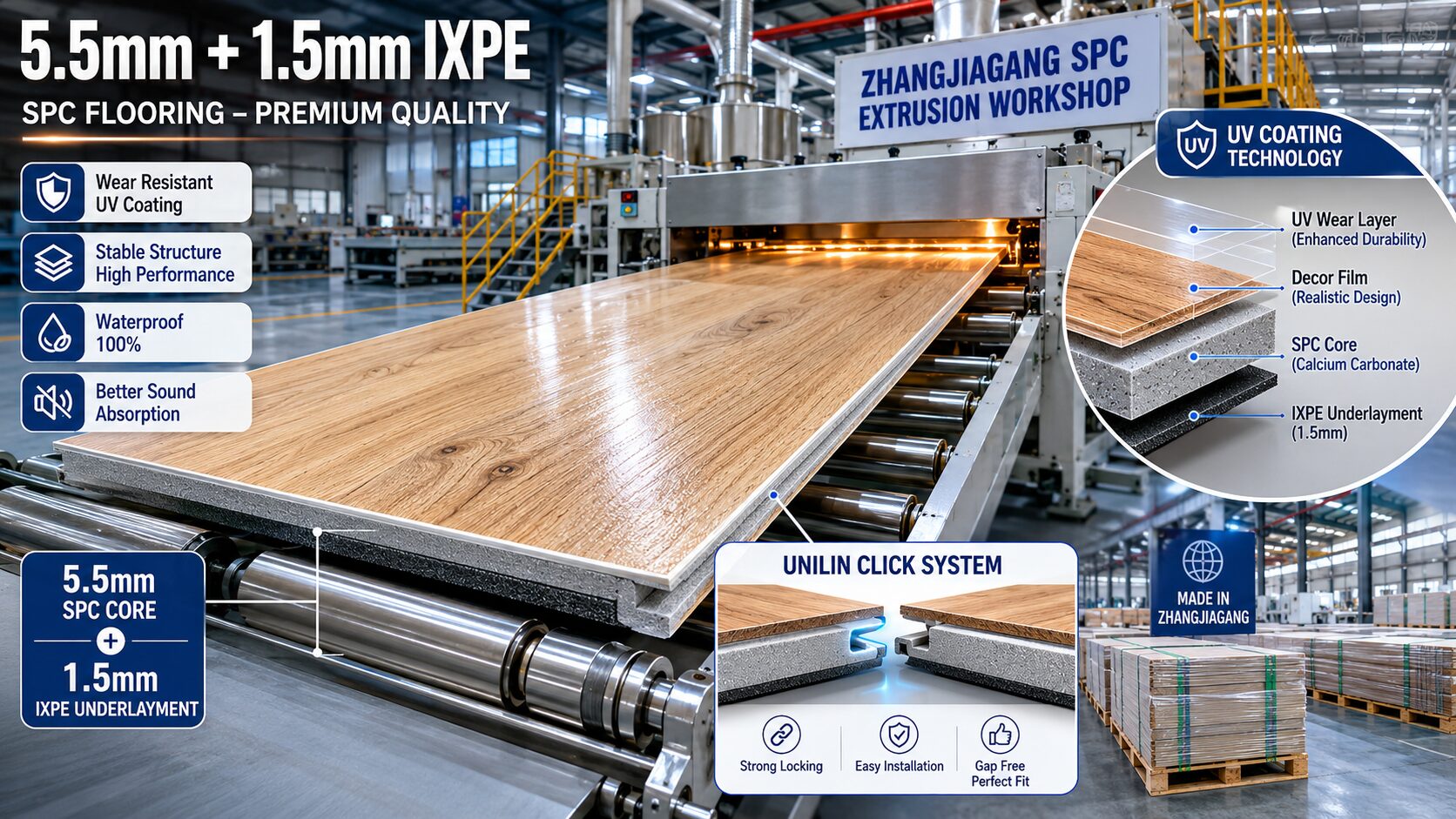
The dangerous zone in 2026 is ultra-thin click flooring below 4.2mm. Especially products using low-density core under 1950kg/m³. A 5.5mm + 1.5mm IXPE board with proper virgin resin still survives thermal expansion stress much better than cheap 3.2mm click LVT. That is why warranty claims near balcony doors and south-facing windows always spike during summer.
If you are sourcing through the Chinese supply chain this year, avoid buying only from showroom samples. Real production consistency matters more than embossed texture or digital printing appearance. Factories with stable extrusion line control and full aging time still outperform traders buying from random subcontract workshops. Buyers looking for stable residential-grade material should compare specifications directly with industrial-grade systems from AutoPP Floor SPC Flooring Division and review density, click strength, and UV coating layer thickness before confirming container production.
Buyer’s Direct Action Plan
- Add “Virgin PVC resin ratio ≥ 85%” into purchase contracts.
- Request click-lock tensile test reports above 1.8kN.
- Require 48-hour thermal stability testing at 80°C.
- Reject any factory unwilling to disclose extrusion line quantity or daily output stability.
- For apartment projects, prioritize 5.0mm/0.5mm or 5.5mm + 1.5mm IXPE instead of thin 3.5mm click products.
PVC Resin Prices Are Rising Again — And Factories Already Started Cutting Corners
The Facts
According to Plastics Technology, PVC prices rose another 3¢/lb in May 2026, while Asian PVC market volatility continues due to oversupply pressure and uneven regional demand.
Factory Reality Check
This month in Zhangjiagang, SG-5 PVC resin procurement prices moved roughly 4–6% higher than early April. That alone adds around USD 90–120 cost pressure per 40HQ container depending on board thickness and wear layer configuration.
Now here is where inexperienced importers get trapped.
When resin costs move up quickly, some factories shorten cooling time and reduce resting time after calendering. The board looks flat when loaded into container. Two weeks later, after crossing the equator inside a 55°C container, internal stress starts showing. That is when you see edge peaking, curling, or micro-delamination around the Unipush locking system.
Another quiet move in 2026: reducing UV coating layers from 4 coats to 2 coats while still printing “Anti-Scratch UV Protection” on cartons. Under retail lighting it looks identical. Under heavy commercial traffic, gloss retention collapses within 6–8 months.
We are also seeing aggressive substitution from virgin material to recycled powder on low-end eco-friendly vinyl flooring offers. Some exporters now advertise “green recycled SPC.” Buyers must understand the difference between controlled recycled backing use and random industrial scrap blended into the core layer. Those are not the same thing.
Importers comparing WPC vs SPC comparison data should also stop treating them as interchangeable. WPC tolerates subfloor imperfections better because of foamed structure, but SPC still wins for dimensional stability under temperature swings above 35°C. In Middle East projects and sun-exposed retail shops, SPC remains the safer engineering choice if density and click profile are properly controlled.
Buyer’s Direct Action Plan
- Require production-date photos during mass production.
- Specify minimum UV coating weight in g/m².
- Demand third-party density testing above 2000kg/m³ for rigid SPC.
- Add random carton-opening inspection during loading.
- For commercial projects, avoid anything below 20 mil wear layer.

EU PFAS Rules Are Quietly Reshaping Flooring Exports
The Facts
The EU intensified PFAS monitoring and restriction enforcement in 2026, including stricter drinking-water and chemical compliance frameworks affecting flooring manufacturers and coating suppliers.
Factory Reality Check
Most importers still think PFAS only affects food packaging or textiles. Wrong. Flooring factories using stain-resistant coatings, certain anti-scratch additives, or imported chemical stabilizers are already under pressure from European buyers asking for expanded SVHC and fluorine screening reports.
Inside China flooring export 2026 supply chains, bigger factories already started switching suppliers for UV lacquer chemistry. Smaller workshops are not moving yet because reformulation costs money and slows production speed.
That creates a split market.
The top-tier factories are investing in cleaner coating systems and better traceability. The low-end exporters are still gambling that customs inspections stay random. We already saw buyers in Germany requesting full batch traceability down to coating supplier level for 5.5mm SPC shipments.
The dangerous part for buyers is not only customs risk. Reformulated coatings behave differently under abrasion testing. Some low-cost alternatives reduce scratch resistance by nearly 20–25% after 4000 Taber cycles. On showroom samples, nobody notices. Six months after installation under office chairs, the floor starts whitening around traffic lanes.
Factories with integrated QC and in-house coating calibration will survive this transition better. Buyers evaluating long-term EU business should look at manufacturers with real production transparency, not just cheap FOB pricing. Companies with mature export experience like AutoPP Floor Factory Overview already structure product lines around stable compliance and commercial-grade export documentation.
Buyer’s Direct Action Plan
- Add PFAS-free declaration into compliance package.
- Request fluorine-content laboratory screening.
- Ask suppliers whether UV coating chemistry changed in 2026.
- Require abrasion retention reports after 4000+ Taber cycles.
- Avoid suppliers refusing raw-material traceability disclosure.
Key Data Points
Data Point Specification / Market Context PVC price increase +3¢/lb in May 2026 Recommended SPC thickness 5.0mm–5.5mm IXPE backing 1.0mm–1.5mm preferred Commercial wear layer 20 mil minimum SPC density target ≥ 2000kg/m³ Dangerous low-end products 3.2mm–3.5mm click flooring Click-lock strength ≥ 1.8kN Thermal test recommendation 80°C for 48 hours UV coating standard 4-layer commercial UV Container heat exposure Up to 55°C PFAS water limit EU 0.10 μg/L DOMOTEX asia dates May 27–29, 2026 PVC China average estimate RMB 4,803/mt Recommended residential spec 4.2mm/0.3mm minimum Recommended commercial spec 5.5mm + 1.5mm IXPE 
Buyer FAQ
Why does my SPC flooring buckle near the window?
Because SPC core temperature expansion exceeds the click system tolerance. Dark-color floors near glass can hit surface temperatures above 58°C. Thin 3.5mm boards with low-density core cannot absorb stress properly. We tested a 4.0mm recycled-core panel last month: expansion reached 1.7mm over 1.8 meters after 6-hour heat exposure. A stable 5.5mm virgin-core SPC panel stayed below 0.6mm.
Is 4.2mm/0.3mm SPC still safe for residential use in 2026?
Yes, if the board density stays above 2000kg/m³ and the click profile uses proper Unilin geometry. The problem is not the nominal thickness alone. The real failure point comes from recycled filler overload, short cooling cycles, and weak click machining precision. Cheap offers below USD 4.50/m² FOB usually hide compromises somewhere.
For balanced residential programs, buyers comparing resilient products should also review systems like Waterproof LVT Click Vinyl Flooring and project-grade LVT Dry Back Glue Down Flooring depending on climate and subfloor condition.
How can importers reduce quality claims when buying SPC flooring from China?
Three things matter most:
- Lock density specifications into the contract.
- Inspect actual mass production, not only showroom samples.
- Control container loading moisture and board resting time.
Factories with stable extrusion line management and export QC systems reduce complaint probability dramatically. Importers serious about long-term supply should source directly from manufacturing-focused suppliers through platforms like AutoPP Floor Product Center instead of changing suppliers every quarter chasing USD 0.20 savings.
For specialty applications like modular garages and retail display systems, products such as Interlocking Garage Floor Tiles are also gaining traction because they avoid click-lock fatigue entirely.
References
- https://www.domotexasiachinafloor.com/Exhibition-News/Discover-Full-Range-Complete-WoodFlooring-Solutions-at-DOMOTEXasia-CHINAFLOOR-2026.html
- https://www.cover-magazine.com/2026/03/19/domotex-asia-chinafloor-2026-how-to-plan-your-visit/
- https://www.globaltextiletimes.com/press-issues/domotex-asia-chinafloor-2026-opens-applications-for-the-buyer-club-hospitality-program/
- https://www.ptonline.com/articles/may-2026-price-trajectory-for-all-resins-shifts-sharply-upward
- https://www.plastradeasia.com/en/market-insights/supply-chain/pvc-resin-march-april-2026-regional-demand-continent
- https://www.linkedin.com/posts/mariakhamitova_chinapvc-pvcmarket-petrochemicals-activity-7426546224406872064-5SfQ
- https://environment.ec.europa.eu/news/new-eu-rules-limit-pfas-drinking-water-2026-01-12_en
- https://www.aoshearman.com/en/insights/pfas-in-the-eu-a-regulatory-turning-point
- https://www.msds-europe.com/pfas-regulation-2025-2026-company-actions/
- https://sustainabilityservices.eurofins.com/news-vi/pfas-regulations-overview-2026-for-consumer-products/
Published by AutoPP Floor | Contact Team: AutoPP Floor Contact Team