Quick Answer
PVC resin on China’s Dalian Commodity Exchange (DCE) is trading at 4,539 CNY/T as of August 10, 2026—down roughly 9.3% year-on-year—giving SPC flooring buyers a cost-side window that hasn’t been open for several years. At the same time, ocean freight from China has about doubled since March 2026. New US tariff measures took effect on July 24. This has tightened landed-cost margins. Buyers finalizing Q4 orders should lock in production slots and evaluate whether current freight levels warrant bonded-warehouse or breakbulk strategies.
PVC Resin: The Cost Window Is Open, but Don’t Assume It Lasts
As of August 10, China’s DCE polyvinyl futures are at 4,539 CNY/T, essentially flat month-on-month (+0.02%), but still sitting 9.27% below where they were a year ago (Trading Economics, August 10, 2026). The near-term Q3 forecast puts the contract at approximately 4,458 CNY/T—suggesting a modest softening into quarter-end rather than a sharp rebound.
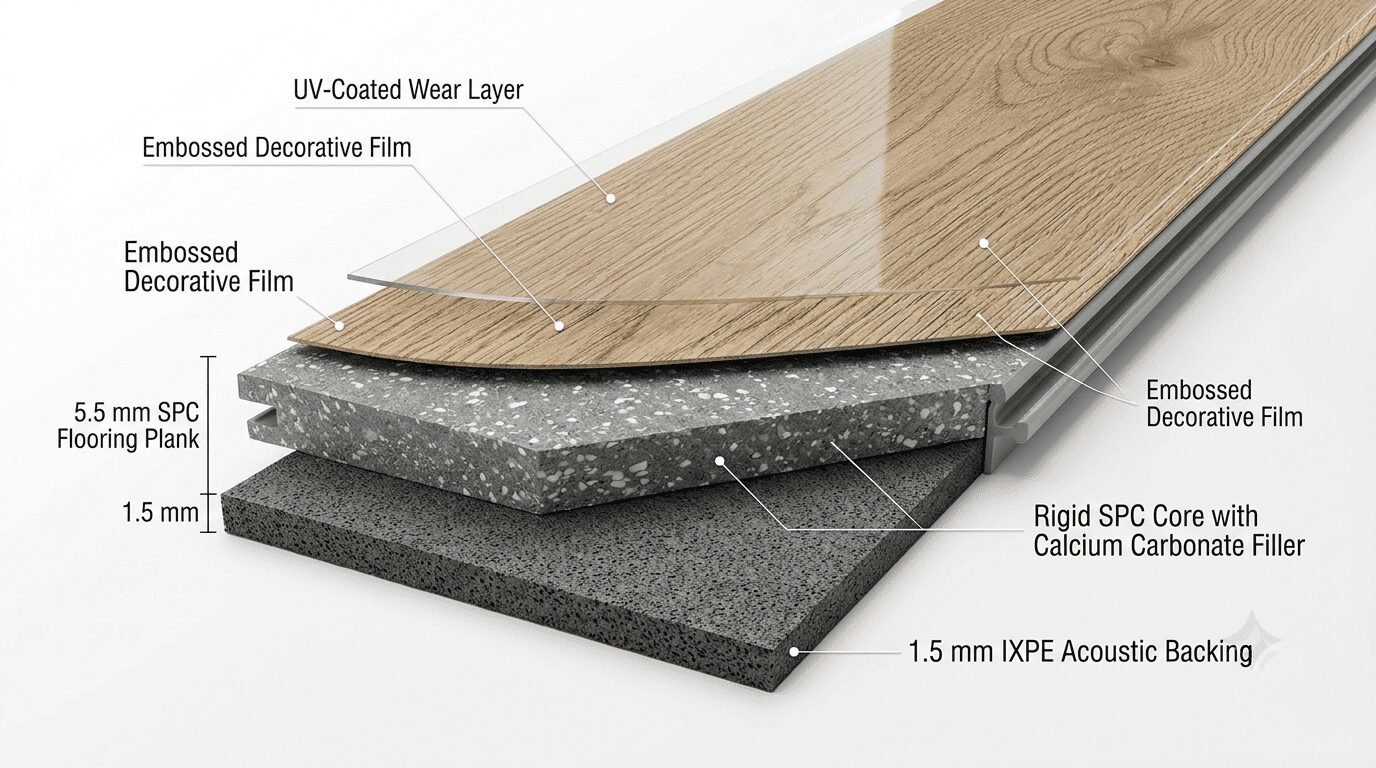
This matters directly for SPC flooring manufacturing. PVC resin typically accounts for 35–45% of a rigid-core SPC compound’s raw-material cost (the rest being calcium carbonate filler, plasticizers, stabilizers, and processing aids). When resin is soft, a well-run extrusion line can absorb some of that margin benefit while holding a competitive price.
Global context adds nuance: June 2026 resin benchmarks ranged from USD 609/MT in Japan to USD 946/MT in Germany (IMARC Group / LinkedIn PVC Resin Price Index, July 2026). China’s equivalent translates to roughly USD 620–640/MT at current exchange rates—competitive for export-grade compounding. This regional spread is not an abstract statistic: it affects which markets Chinese-manufactured SPC can actually penetrate on total landed cost.
What’s driving the softness? Three structural factors:
- Weak US housing. New residential starts have remained sluggish, limiting chlor-vinyl demand from the world’s largest end-market. When pipe and construction-grade PVC sits in inventory, flooring-grade resin feels the indirect pressure.
- Balanced Asian operating rates. No major force-majeure events have constrained Chinese or Asian PVC supply recently, so spot availability is comfortable.
- Feedstock softness. Ethylene and VCM input costs have eased from peak levels. Producers are not under enough cost pressure to force offers higher.
The practical implication: if you’re placing SPC orders for Q4 delivery, the current resin environment is relatively favorable for negotiating a firm factory price. The risk is that freight will absorb some of that gain (see below).
Freight Has Roughly Doubled Since March—And May Stay Elevated Until October
The raw-material cost story would be more straightforward if freight cooperated. It doesn’t.
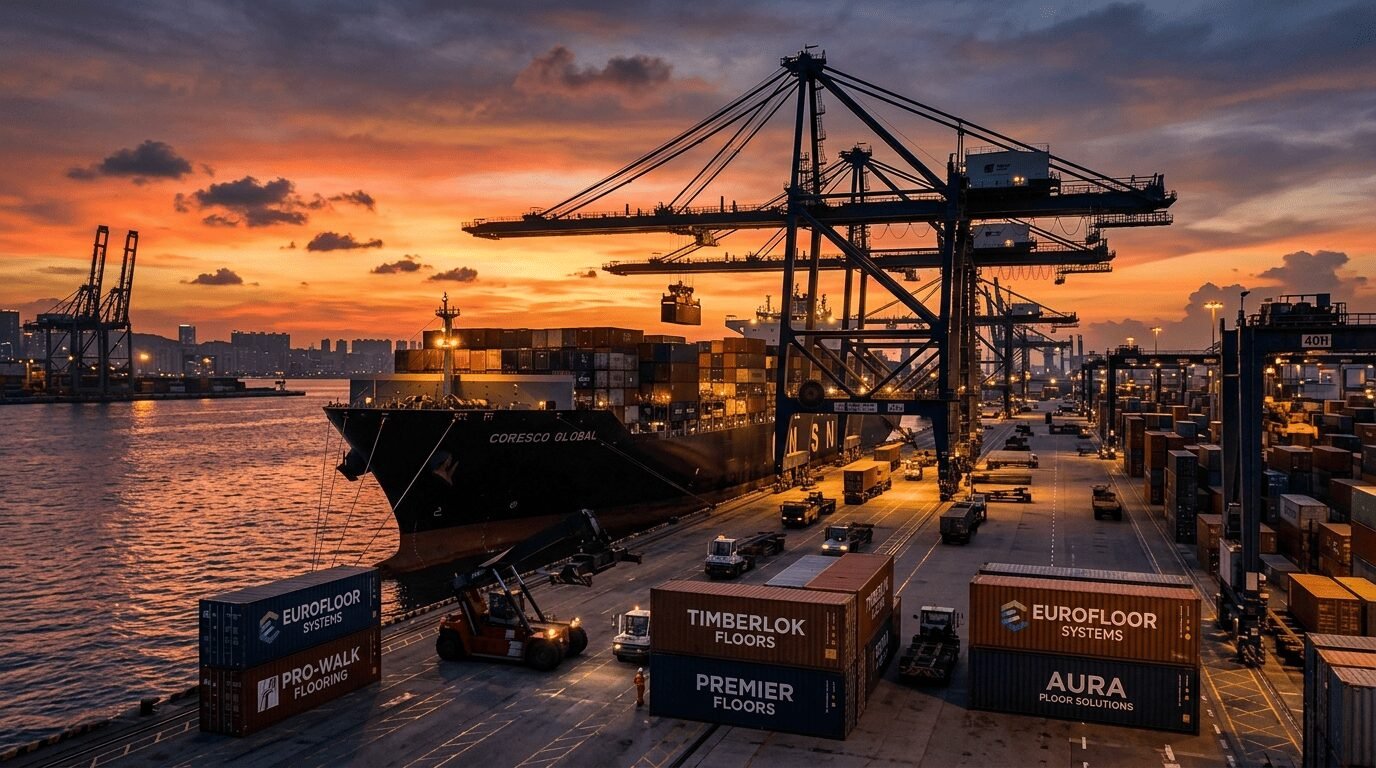
Container rates from China/East Asia to North America sat at roughly USD 1,600–1,700 per container (FEU) in early March 2026. By late May they had reached USD 3,700–4,500 for the same lanes, a doubling-plus in about ten weeks (FreightRight, May 18, 2026; EdHat, May 29, 2026). The SCFI composite index stood at 2,572 on June 1, 2026—up 24% year-on-year and 34.5% over just one month (Carra Globe, June 6, 2026).
One analysis of the market suggests rates will remain elevated through October 2026, driven by sustained carrier capacity management and residual demand from importers rebuilding inventory after earlier trade-war hesitation (Carra Globe, June 6, 2026).
For SPC flooring, the math is not trivial. A standard 40-foot container holds roughly 1,800–2,000 m² of 5.5mm SPC (depending on packing density and box configuration). At current freight levels, shipping cost per square meter has increased by approximately USD 0.90–1.30 compared to early-year rates—a meaningful squeeze when landed product competes at USD 4–9/m² depending on specification.
Procurement response options:
The general advice from freight watchers: if you have Q4 production confirmed and space available, book containers sooner rather than later.
New US Tariffs: Section 301 / 338 Mechanics and What They Mean for Flooring Importers
On July 24, 2026, the flat 10% Section 122 tariff that had been governing a broad set of Chinese imports expired. The Trump administration replaced it with Section 301 and Section 338 measures, resulting in tariff rates of 10–12.5% applied to 60 trading partners including China and the EU (Reuters, July 24, 2026; Allianz Economic Research, July 22, 2026).
For US importers of Chinese SPC flooring, this continues a tariff environment that has been in place in various forms since 2018. The key operational questions are:
- What is the applicable HTS classification? SPC and LVT flooring products typically fall under HS 3918 (floor coverings of plastics). Confirm your specific sub-heading with a licensed customs broker—rate application can differ.
- Has your exporter provided a compliant country-of-origin documentation set? With tariff scrutiny elevated, CBP documentation standards are not the place to cut corners.
- Does your PO include DDP terms, or is duty responsibility clearly allocated? Ambiguity here has caused disputes between importers and Chinese factories; address it in writing before production starts.
The EU side shows a different profile: an agreement was reached capping most EU-origin exports to the US at 15% (Euronews, June 3, 2026), but this primarily affects European manufacturers, not Chinese exporters shipping to the EU. Chinese SPC floor exports into the EU still face REACH, SVHC, and FloorScore compliance requirements rather than escalating tariff risk from that direction.
Factory Perspective: What Soft PVC Prices Mean on the Production Floor
From a manufacturing standpoint, resin price softness is welcome but not a windfall if you’re not paying attention to compound stability. Here’s the practical reality.
SPC compound typically uses suspension-grade PVC (S-PVC) with a K-value of 65–68, depending on the product specification. When producers compete on resin price, they sometimes test the lower bound of K-value or adjust filler loading to compensate. A higher CaCO₃ loading (say, above 60 phr) can reduce cost but affects dimensional stability—particularly the coefficient of thermal expansion across temperature cycles. For products targeting markets with underfloor heating, this matters.
A common production configuration for a mid-range SPC:
- Core thickness: 4.0–5.5mm
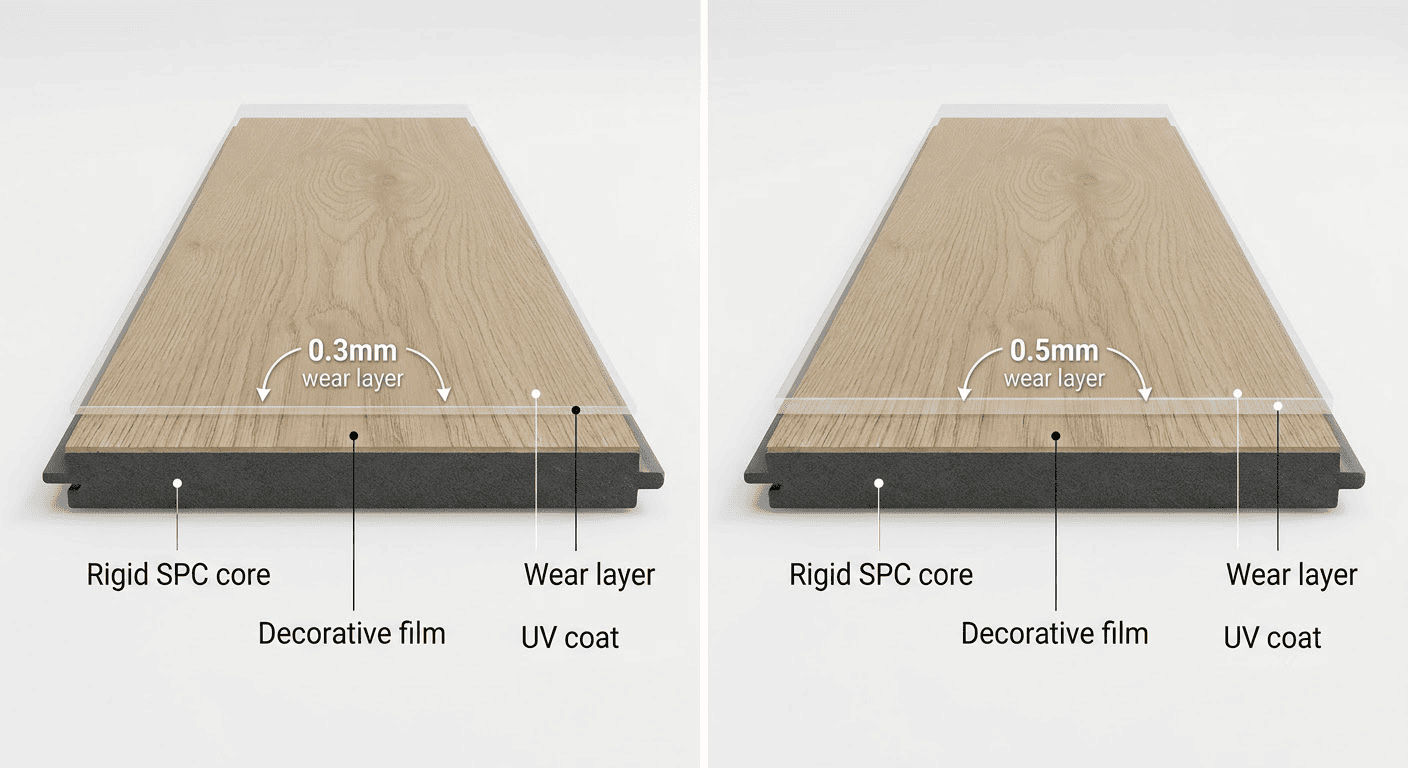
- Wear layer: 0.3mm (residential light commercial) or 0.5mm (heavy commercial)
- Backing: 1.0–1.5mm IXPE foam for acoustic performance
- Surface: UV-cured coating over EIR (Embossed-in-Register) decorative film
When evaluating competitive quotes in a soft-resin environment, ask suppliers:
- What is the filler loading (phr of CaCO₃) in the specified compound?
- What is the dimensional stability result to EN ISO 23999 or ASTM F2199?
- What production batch testing frequency is applied to wear-layer thickness?
A price that looks attractive on the PI may reflect a compound specification that will show delamination or geometric drift in a heated warehouse in Arizona or a cold showroom in Ontario.
FAQ
Q1: With PVC resin down about 9% year-on-year, should I expect SPC factory prices to drop proportionally?
Not proportionally—PVC resin is one input among several. Calcium carbonate, stabilizers (often tin-based or calcium-zinc), UV coatings, IXPE backing, film, and labor all have their own cost trajectories. A rough rule: if resin drops 10%, finished SPC factory price may move 3–5%, depending on the product structure and the supplier’s margin position. Freight and tariff increases can easily offset resin savings in the landed cost calculation.
Q2: How do I verify the wear-layer thickness I’m paying for?
Request an independent SGS or Intertek cross-section test report, specifying EN ISO 24340 for wear-layer measurement. Ask that the test be performed on production-run material, not pre-production samples. Include an allowable tolerance in your purchase order—a common specification is ±0.05mm on the stated wear-layer value.
Q3: Container rates from China have surged. Is there a way to reduce freight exposure without going to air freight?
Three practical options: (1) Increase pack density by reviewing packaging—some flooring manufacturers can adjust box count or pallet height within container clearance limits; (2) Consolidate orders with a freight forwarder offering weekly LCL consolidation if your volume doesn’t fill a full container; (3) Negotiate FOB and manage your own freight booking to select carriers with better capacity access. None of these eliminate rate risk, but they can reduce cost per square meter.
Conclusion
August 2026 sits at an unusual intersection: raw-material cost is in a buyer-friendly phase while logistics cost is in a seller’s market. The net effect on total landed cost depends on product specification, order timing, freight booking strategy, and whether you’ve confirmed your tariff classification is current.
Buyers who move now—with PVC resin still below prior-year levels and confirmed Q4 production slots at a manufacturer with verified compound specs and test documentation—are in a stronger position than those waiting to see if freight settles.
AutoPP Floor’s SPC flooring range covers residential and commercial specifications in 4.0mm to 5.5mm core configurations, including IXPE-backed options. Buyers needing glued-down LVT for commercial projects can review that product line separately. For sourcing conversations, the contact page is the fastest route to a quotation.