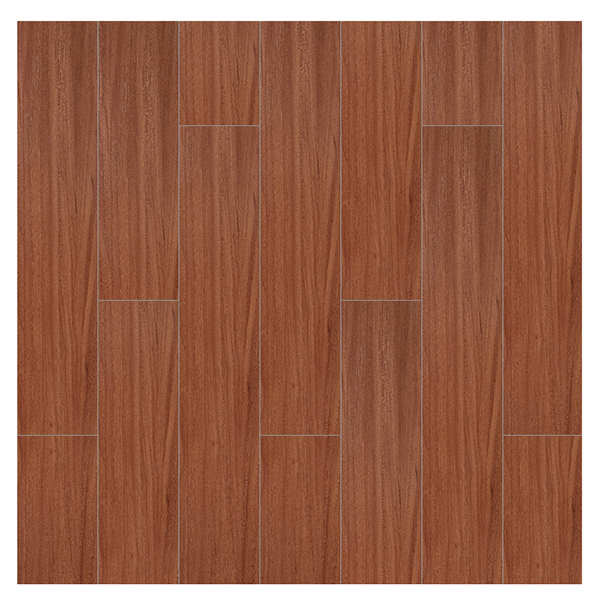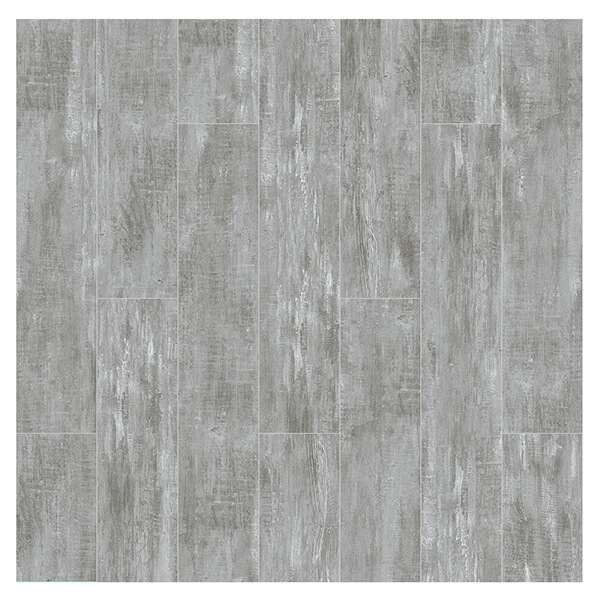
A monthly procurement intelligence briefing for global PVC flooring buyers sourcing from China.
Three things happened in August 2026 that every serious PVC flooring importer should know before placing Q4 orders. A new material category called m-SPC entered commercial licensing. Ocean freight from China rose to its highest level since 2021. The US tariff structure shifted again. None of these developments cancel each other out. But together, they change landed-cost math and specification talks. These shifts require an active response, not a wait-and-see approach.
Data Sources & Methodology Note
Raw material pricing uses Trading Economics data.It cites DCE PVC futures for August 2026.It also uses ECHEMI data.It cites China domestic PVC prices from August 14, 2026.
Freight data references the Drewry World Container Index.It uses the week of August 13, 2026.The index was USD 4,339 per 40ft container.It also references FreightRight and EdHat.It uses their May to August 2026 rate trend.
Tariff information references Baker Botts Trump Tariff Tracker (July 21, 2026) and Reuters (July 24, 2026). Material innovation references CFL Flooring and i4F official press releases (May–August 2026). All figures come from tools available when we wrote this. Buyers should confirm current rates with their freight forwarder and customs broker before finalizing orders.
1. Raw Material: PVC Resin Is Still Soft — But the Window Has Limits
China’s Dalian Commodity Exchange (DCE) PVC futures traded near 4,539 to 4,588 CNY/T in mid-August 2026.This was about a 9% drop from the same time last year (Trading Economics, August 2026). China domestic spot PVC was quoted at around 4,385 CNY/MT as of August 14 (ECHEMI, August 14, 2026).
For context: PVC resin often makes up 35–45% of an SPC compound’s raw material cost. The rest includes calcium carbonate filler, plasticizers, stabilizers, and processing aids. A 9% year-over-year resin decline leads to about a 3–5% change in finished SPC factory pricing.It is not a windfall, but it is a real cost advantage.A well-positioned buyer can capture it with firm pricing agreements.
What’s driving the softness:
- Weak US housing starts have reduced demand from the world’s largest PVC end-market
- Balanced Asian operating rates with no major supply disruptions
- Softer ethylene and vinyl chloride monomer (VCM) feedstock costs
The near-term forecast suggests further modest softening into Q3 end (approximately 4,458 CNY/T, per Trading Economics Q3 estimate). That trajectory favors buyers who lock in factory pricing for Q4 production now, before any rebound.
Buyer implication: This is a favorable window to negotiate firm FOB pricing with factories. Resin softness does not last indefinitely, and the logistics cost environment (see Section 2) means that any factory-side savings can be quickly offset at the freight booking stage.
2. Freight: Costs Have Roughly Doubled Since March — Act on Q4 Bookings Now
The ocean freight picture is the dominant commercial variable for PVC flooring importers in August 2026, and it is moving in the wrong direction.
The Drewry World Container Index (WCI) was USD 4,339 per 40-foot container for the week of August 13, 2026. It was up about 8.93% from the prior month (Drewry / Trading Economics, August 13, 2026). From a floor of roughly USD 1,600–1,700/FEU in early March 2026, transpacific rates had reached USD 3,700–4,500 by late May. Industry analysis available in June 2026 suggested rates could remain elevated through October.
What this means for per-square-meter landed cost:
A standard 40-foot container holds approximately 1,800–2,000 m² of 5.5mm SPC flooring (depending on packaging and pallet configuration). At current freight levels, ocean freight alone contributes approximately USD 2.17–2.41 per m² before port handling, destination fees, or insurance. Compared to early-year rates, that represents an increase of roughly USD 0.90–1.30 per m² — a significant squeeze when finished product competes at USD 4–9/m² depending on specification.
Practical freight responses for importers:
- Consolidate shipments. Moving from LCL to full 40-foot containers meaningfully reduces per-m² freight cost.
- Book Q4 early. Production lead times of 8–10 weeks plus booking windows mean late-August is the correct time to act for November–December delivery.
- Review packing density. Some manufacturers can adjust box configuration or pallet count within standard container limits. A 5–8% improvement in packing density at current rate levels has a direct bottom-line impact.
- Clarify freight terms in writing. Current rate volatility makes ambiguous FOB versus CIF versus DDP terms expensive. Lock in responsibility in the purchase order.
3. Tariff Update: What Changed in Late July and What It Means for Chinese SPC
The US tariff situation shifted again in late July 2026. The flat 10% Section 122 tariff on many Chinese imports was replaced.Section 301 and Section 338 measures took its place.These changes led to rates of about 10% to 12.5%.The rates applied to many trading partners, including China.(Reuters, July 24, 2026; Baker Botts, July 21, 2026).
For US importers of Chinese PVC and SPC flooring, this is a continuation of a tariff environment that has been active in various forms since 2018. The rate change is not dramatic, but the enforcement context matters:
- HTS classification matters. SPC and LVT flooring typically falls under HS 3918 (floor coverings of plastics). Confirm your sub-heading with a licensed customs broker — rate application can differ by product sub-category.
- Country-of-origin documentation must be current. With enforcement active, documentation gaps create detention risk.
- DDP versus FOB terms. In the current environment, ambiguity about who pays duty is an operational risk. Resolve it in writing before production starts.
On the EU side: Chinese SPC exports into the EU currently face compliance-based requirements (REACH/SVHC, FloorScore, EN ISO standards) rather than escalating tariff risk. The main certification burden has not changed, but enforcement of documentation completeness at EU customs entry points has tightened.
4. Material Innovation: m-SPC Enters the Market — What It Is and What It Means for Buyers
The most important structural change in PVC flooring this August is the commercial launch of m-SPC. CFL Flooring and i4F announced it in May and June 2026. It was confirmed by a European patent grant (EP 3907349) in August 2026. Sources: CFL Flooring (August 13, 2026) and i4F (May 26, 2026).
What m-SPC Actually Is
Standard SPC uses a UV-cured PVC decorative film on top of a stone-plastic composite core. The surface’s weak point — relative to competing commercial flooring materials — has always been scratch resistance and stain resistance beyond what UV coating can deliver.
m-SPC replaces the UV-coated PVC surface layer with a melamine-grade surface.
This is the same type of material used in commercial laminate flooring. The result targets:
- Substantially improved scratch resistance versus UV-coated SPC
- Better stain resistance for commercial interiors
- Competitive positioning against laminate in commercial project specifications where SPC previously struggled
Alongside m-SPC, CFL and i4F also commercialized Optibevel. It is a laser-cut in-line bevel system. It replaces pressed-bevel tooling. It delivers more consistent gloss and profile across multiple plank formats.
What It Means for Importers and Distributors
m-SPC is not going to replace standard SPC at volume in the near term. It is a premium material category designed for commercial interiors where the conventional SPC wear layer claim under heavy traffic is credibility-limited.
For buyers competing in:
- Hospitality and hotel corridors — where 5-year wear guarantees are challenged
- Healthcare and education projects — where stain resistance and cleanability are specification requirements
- Commercial retail environments — where laminate currently holds share on scratch resistance
…m-SPC creates a new product tier argument. Expect it to cost about 15–30% more than standard SPC of the same size.This estimate is from the factory and is based on tooling, licensing, and compound costs.
What to do now: If your channel competes at commercial or premium residential levels, request m-SPC samples. Ask any licensed producer for third-party scratch and stain resistance test data. The technology exists; the supply chain is early-stage. Evaluate it as a forward-looking SKU addition, not an immediate volume replacement.
5. Product Specification Snapshot: What to Specify for Q4 2026 Programs
Based on current market conditions and compliance needs, this framework lists what B2B buyers should include in Q4 purchase orders. It is a specification guide
For PVC Floor Products and SPC Flooring programs, the mid-market commercial column has the highest volume.
It is also the most active specification range.
This applies to Q4 2026 programs worldwide.
6. Compliance Calendar: What EU and US Buyers Must Have in the Document Pack
The compliance documentation requirements for PVC flooring have not changed in August. However, customs and project tenders now enforce complete documentation more strictly. Use this as a delivery checklist:
For EU-bound shipments:
- REACH SVHC declaration — current ECHA Candidate List version referenced, not a generic declaration from a prior year
- FloorScore certificate (product-specific, with certificate number verifiable via SCS Global Services)
- French A+ test report (for French market distribution)
- CE Declaration of Performance under EN 14041 if project-specification required
- Country-of-origin documentation with raw material traceability
For US-bound shipments:
- FloorScore or equivalent IAQ certification for any commercial specification program
- California Proposition 65 documentation — plasticizer and stabilizer identified by compound name
- HTS sub-heading confirmed with customs broker
- Country-of-origin documentation at CBP-required detail level
For all markets:
- Production batch test report (not pre-production sample report)
- Wear layer thickness test report specifying measurement method (EN ISO 24340 or ASTM F2199)
- Dimensional stability test result from production batch
Request these documents before production starts, not at shipment stage. Factories that cannot produce them on request should not be processing your order.
7. What AutoPPFloor Can Support for Q4 Programs
AutoPPFloor (Suzhou Senso Saintour Import & Export Co., Ltd.) operates from an 18,600 sqm manufacturing complex in Zhangjiagang, Suzhou, Jiangsu. The factory’s product range covers the full PVC flooring category:
- PVC Floor Products — multi-category residential and commercial
- SPC Flooring — rigid-core programs for distributors and private-label brands
- Waterproof LVT Click Vinyl Flooring — wet-area and DIY channel programs
- LVT Dry Back (Glue Down) Flooring — commercial glued-installation programs
- Interlocking Garage Floor Tiles — utility and garage formats
For Q4 sourcing discussions, sample requests, or compliance document review: Contact Us | About Us
8. August 2026 Buyer Action Checklist
- Lock in factory pricing for Q4 production while PVC resin remains ~9% below year-ago levels
- Book freight now — current Drewry WCI at USD 4,339/40ft; rates may remain elevated through October
- Confirm HTS classification with customs broker under current Section 301/338 tariff structure (US buyers)
- Request production batch test reports — not pre-production sample reports — for all compliance documents
- Evaluate m-SPC sample set if your channel competes at commercial or hospitality specification levels
- Upgrade mid-market SKUs to EIR + 0.50mm wear layer + IXPE if still running flat-emboss / 0.30mm programs
- Confirm plasticizer compound name in writing — not just “phthalate-free” claim — for EU and US retail programs
- Include batch traceability requirement and acceptable defect rate in Q4 purchase orders
9. FAQs: August 2026 Procurement Questions
Q: With PVC resin down roughly 9% year-on-year, how much should factory prices move?
PVC resin is one input among several. Calcium carbonate filler, stabilizers, UV coatings, IXPE backing, decorative film, and labor each have separate cost trends. A rough operating rule: a 9–10% resin decline may translate to a 3–5% reduction in finished SPC factory price, depending on the product structure and the supplier’s margin position. Elevated freight and tariff costs can absorb that entire savings at the landed-cost level.That is why you must review factory pricing and logistics together, not one after the other.
Q: Should I start sourcing m-SPC for my commercial programs now?
m-SPC is commercially available via licensed manufacturers, but it is early-stage in terms of supply chain breadth. For projects that need more scratch and stain resistance than a 0.50mm UV-coated wear layer provides, request samples.Also request verified third-party test data from an i4F-licensed producer.This is especially important in hospitality, healthcare, and demanding retail environments. For standard residential or light commercial supply, conventional SPC with a verified compound spec is more cost-effective. It also offers a more predictable supply chain in Q4 2026.
Q: Is there a practical way to reduce per-m² freight cost without switching to air freight?
Three options: (1) consolidate LCL shipments into full 40 ft containers. (2) review packaging density with your factory. Even a 5–8% gain in packing efficiency matters at current rates. (3) negotiate FOB and manage your own freight booking. Do not accept factory-nominated freight. None eliminates rate risk, but each can reduce per-m² cost.
Q: The US tariff structure changed again in late July. What should I actually do?
Confirm your HTS subheading under HS 3918 with a licensed customs broker. Verify your country-of-origin documents meet current CBP standards. Make sure your purchase order clearly assigns who pays tariffs (FOB vs. DDP). If you are considering Vietnam or another third country to reduce tariff risk, review the substantial transformation test. Also review any circumvention orders with a qualified trade attorney before changing your supply chain.
Data Sources
- Trading Economics — DCE PVC futures, August 2026 (4,539–4,588 CNY/T range): https://tradingeconomics.com/commodity/polyvinyl
- ECHEMI — China domestic PVC spot price, August 14, 2026 (approx. 4,385 CNY/MT): https://www.echemi.com/productsInformation/temppid160705011656-polyvinyl-chloride.html
- Drewry / Trading Economics — World Container Index, week of August 13, 2026 (USD 4,339/40ft container): https://tradingeconomics.com/commodity/containerized-freight-index
- FreightRight — China–North America container rate trend, May 2026
- Baker Botts — Trump Tariff Tracker, July 21, 2026: https://ourtake.bakerbotts.com/post/102ndeb/trump-tariff-tracker-july-21-2026
- Reuters — US Section 301/338 tariff measures, July 24, 2026
- CFL Flooring — “CFL Flooring Marks a Decade as the Inventor of SPC with New Patent Grant,” August 13, 2026: https://www.cflflooring.com/cfl-flooring-marks-a-decade-as-the-inventor-of-spc-with-new-patent-grant/
- i4F — “i4F Extends Partnership with CFL to Deliver Global Benchmark for Premium Enhanced Bevel Technology and New m-SPC Material Category,” May 26, 2026: https://i4f.com/article/i4f-extends-partnership-with-cfl-to-deliver-global-benchmark-for-premium-enhanced-bevel-technology-and-new-m-spc-material-category/
- SCS Global Services / FloorScore — FloorScore certification program: https://www.scsglobalservices.com/services/floorscore
- ECHA — REACH SVHC Candidate List: https://echa.europa.eu