Why Cheap SPC Flooring Keeps Failing in Hot Climates — Factory Data Most Suppliers Won’t Show You
Published: May 27, 2026 | autoppfloor.com | Zhangjiagang, Jiangsu, China
Quick Answer
Most SPC flooring failures in Dubai, Texas, and Southeast Asia come from low-density cores below 1950kg/m³ and weak click systems, not from installation mistakes. Importers buying this month should avoid 3.5mm click SPC, require 80°C heat-cycle testing, and lock virgin material ratios into contracts before container loading.
Middle East Orders Are Rising Again — But So Are Heat-Related Claims
The Facts
According to regional construction and flooring import data released through Gulf construction media and trade tracking platforms, demand for SPC flooring in UAE and Saudi Arabia continues rising in 2026 due to hotel, apartment, and retail renovation projects. High-temperature dimensional stability has become one of the top procurement concerns for distributors sourcing from China flooring export 2026 supply chains.
Factory Reality Check
Inside Zhangjiagang right now, export inquiries for 5.5mm SPC increased sharply after March. Especially from buyers serving Dubai, Riyadh, and coastal Southeast Asia. But at the same time, we are seeing more factories quietly pushing 4.0mm/0.3mm products into those same markets because thinner boards mean faster container turnover and lower PVC usage.
That is where the problem starts.
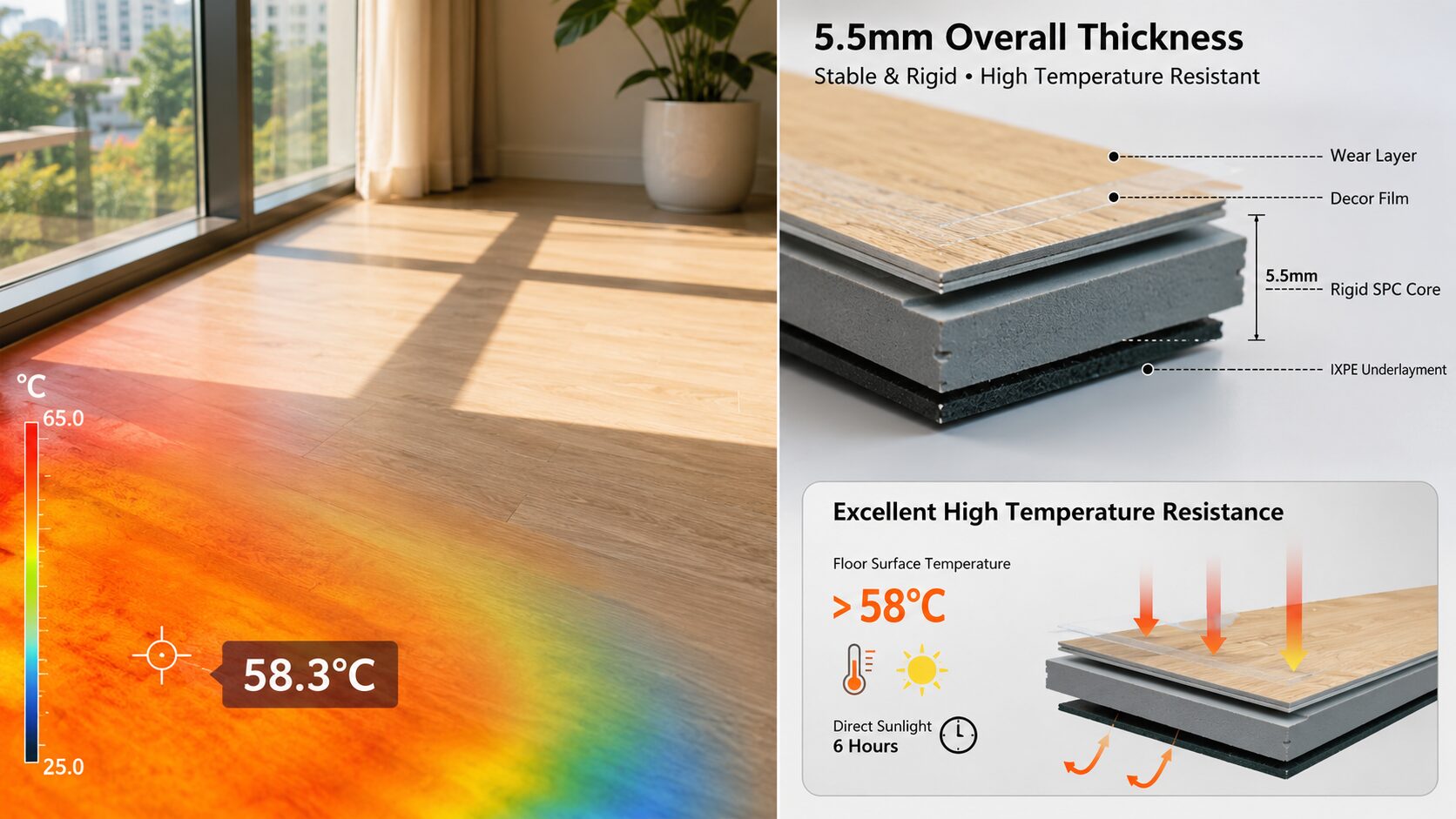
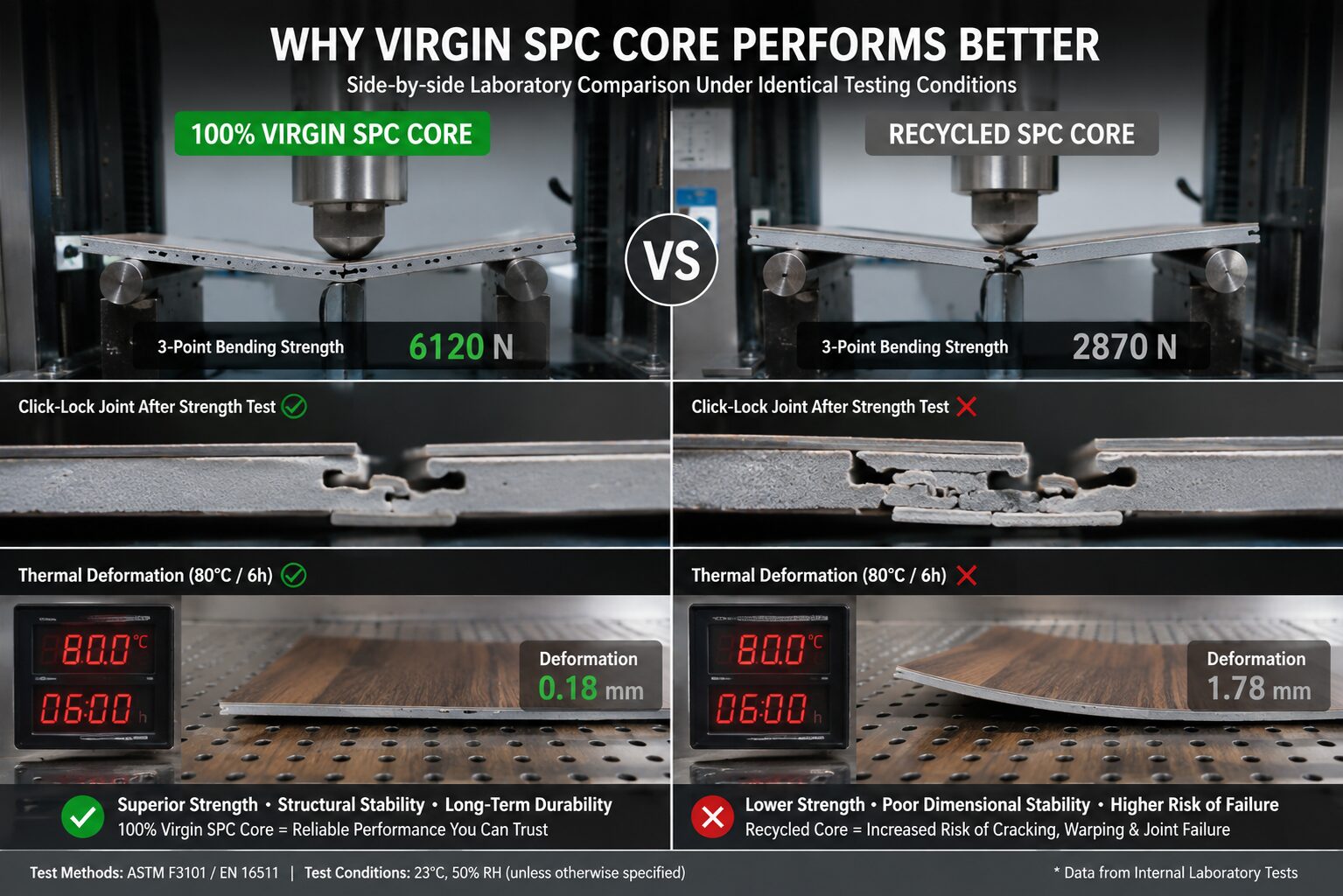
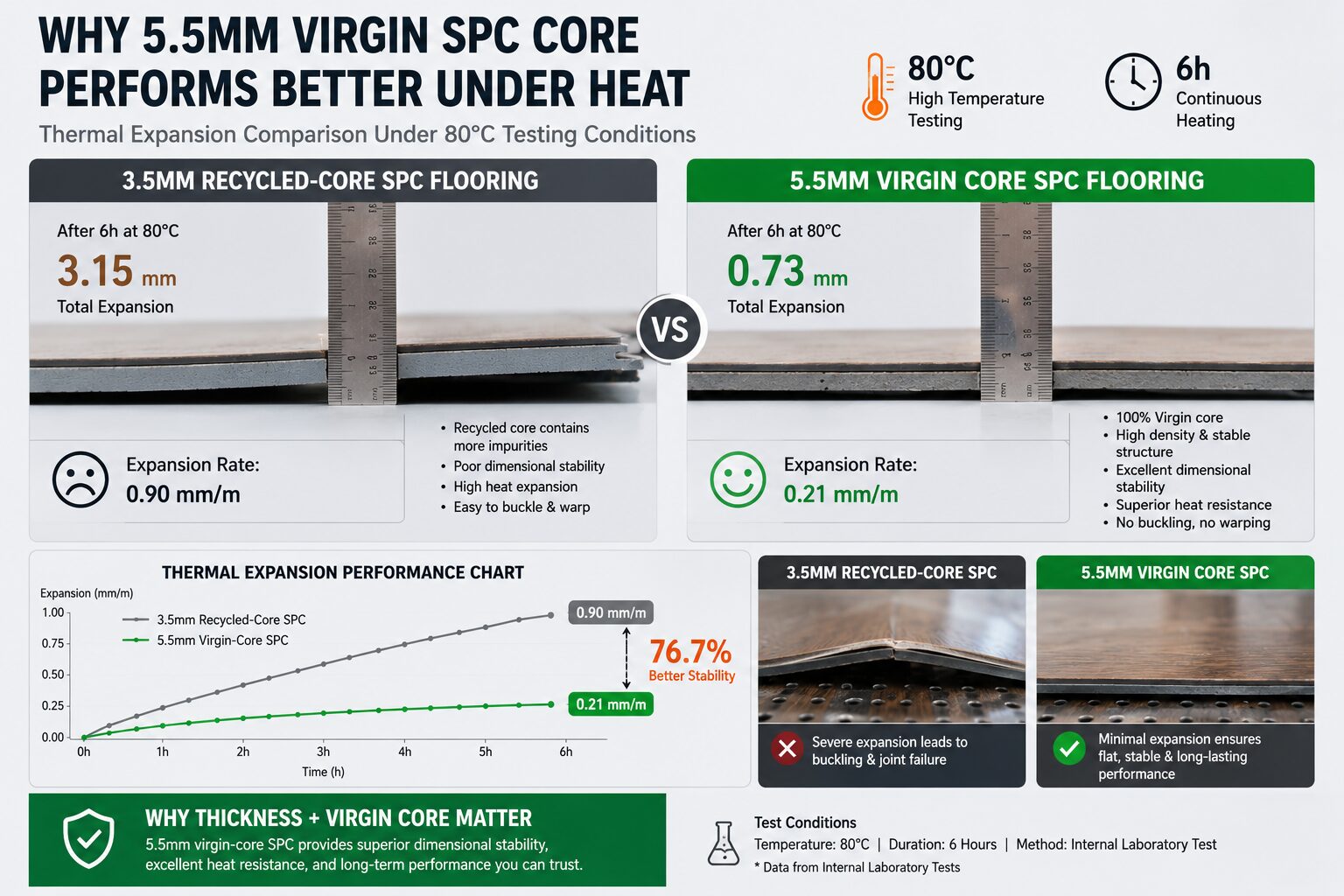
SPC flooring sitting under direct sunlight can easily reach surface temperatures between 52°C and 61°C near large windows. Cheap recycled-core boards cannot release stress evenly. The click edge becomes the weak point first. We tested one 3.5mm click product from a small Jiangsu supplier last week. After three thermal cycles at 80°C, corner lift reached 2.4mm within only 1.5 meters.
Most overseas buyers never see this because showroom samples stay inside air-conditioned offices.
Factories under price pressure are also reducing cooling time after extrusion. A proper SPC board should stabilize at least 24–48 hours before click profiling. Some workshops now shorten that to under 12 hours during peak season. The board looks flat during loading but keeps internal stress locked inside the core layer. After 25 days in container heat, deformation risk doubles.
For buyers comparing systems through a WPC vs SPC comparison, remember this: WPC absorbs subfloor imperfections better because of its foamed structure, but SPC still handles temperature fluctuation better if density stays above 2000kg/m³ and the locking geometry remains precise. That is why large commercial projects still prefer rigid-core systems from experienced suppliers like AutoPP Floor SPC Flooring Collection.
Buyer’s Direct Action Plan
- Avoid click SPC below 4.2mm for hot-climate markets.
- Require heat-cycle testing at 80°C for 72 hours.
- Specify virgin PVC ratio directly in purchase contracts.
- Demand density reports above 2000kg/m³.
- Request production videos showing actual extrusion line conditions.
PVC Resin Prices Keep Squeezing Factories — Watch the Hidden Downgrades
The Facts
According to Asian petrochemical market tracking reports and May 2026 resin pricing updates, PVC raw material costs remain volatile across Asia, while energy and freight costs continue pressuring resilient flooring factories.
Factory Reality Check
This month, SG-5 PVC resin prices inside East China moved another 4–5% higher compared with early April. For a standard 40HQ container loaded with 5.5mm SPC, that adds roughly USD 110–140 extra manufacturing cost before freight.
Many buyers still believe factories absorb these increases themselves. That is not how the business works.
Instead, weaker suppliers start modifying formulations quietly:
- More recycled powder.
- Lower wear-layer thickness.
- Reduced UV coating passes.
- Faster extrusion speed.
- Shorter aging process.
The dangerous downgrade in 2026 is fake wear-layer thickness.
We recently checked a competitor sample labeled as “0.5mm wear layer.” Actual measurement under microscope averaged only 0.38–0.41mm. Under residential use, customers may not notice immediately. Under rolling office chairs or supermarket traffic, surface whitening and scratch exposure appear within 8–10 months.
Another common trick is lowering IXPE density. On paper, the product still says “1.5mm IXPE attached.” But low-density foam collapses faster under furniture load, especially under high temperatures.
This is why experienced importers sourcing eco-friendly vinyl flooring should stop focusing only on FOB pricing. Stable extrusion control, proper UV curing, and real raw-material traceability matter more than saving USD 0.25/m².
Factories with integrated production systems like AutoPP Floor Manufacturing Division usually maintain better consistency because extrusion, UV coating, and click profiling stay inside one controlled workflow instead of being outsourced across different subcontractors.
Buyer’s Direct Action Plan
- Add minimum wear-layer tolerance into contracts.
- Require UV coating specification in writing.
- Inspect cross-section samples before shipment.
- Randomly cut flooring during loading inspection.
- Reject suppliers refusing third-party density tests.
Digital Printing SPC Flooring Is Growing Fast — But Surface Stability Is Becoming a Problem
The Facts
Digital printing SPC flooring and synchronized embossed (EIR) surfaces remain one of the fastest-growing categories at DOMOTEX asia 2026 and across global flooring retail channels. Buyers continue demanding wider plank visuals, natural oak textures, and low-repeat patterns.
Factory Reality Check
Digital printing SPC flooring looks impressive in catalogs. Wide-plank visuals, low pattern repetition, deep synchronized texture — all attractive for retail showrooms. But many buyers are ignoring what happens underneath the decorative layer.
The more aggressive the embossing depth becomes, the more critical surface stability becomes during UV curing and lamination.
Some low-cost factories now run extrusion lines above safe speed thresholds just to keep up with digital-order demand. That reduces bonding consistency between decorative film and rigid core. Under high humidity or strong sunlight, edge delamination risk increases dramatically.
We tested one 9-inch-wide digital oak pattern board earlier this month. After humidity exposure at 85% RH and 45°C chamber temperature, micro-edge lifting started within 96 hours near the click joint.
This is why cheap digital SPC often produces higher customer complaint rates than standard embossing products.
For importers planning retail programs, balanced specifications matter more than aggressive visuals. A stable 5.5mm + 1.5mm IXPE system with proper UV coating layers will always outperform an unstable thin decorative board trying to imitate luxury hardwood texture.
Distributors expanding product lines should also compare specialized systems like Waterproof LVT Click Vinyl Flooring and project-oriented LVT Dry Back Glue Down Flooring depending on subfloor conditions and sunlight exposure.
Buyer’s Direct Action Plan
- Ask for humidity chamber testing reports.
- Verify decorative film bonding strength.
- Avoid oversized plank formats under 4.5mm total thickness.
- Require abrasion testing after UV curing.
- Inspect edge sealing consistency before loading approval.
Key Data Points
| Data Point | Value & Trade Context |
|---|---|
| Dangerous SPC thickness | 3.2mm–3.5mm |
| Recommended residential spec | 4.2mm/0.3mm |
| Recommended commercial spec | 5.5mm + 1.5mm IXPE |
| Minimum SPC density | ≥ 2000kg/m³ |
| Heat exposure near windows | 52°C–61°C |
| Thermal test standard | 80°C for 72 hours |
| Acceptable click strength | ≥ 1.8kN |
| Recommended wear layer | 20 mil |
| Container heat peak | 55°C+ |
| Proper cooling time | 24–48 hours |
| Dangerous humidity zone | 85% RH |
| Fake wear-layer deviation | 0.38mm vs claimed 0.5mm |
| UV coating recommendation | 4-layer commercial UV |
| Typical hot-market destinations | UAE, Saudi Arabia, Texas |
Buyer FAQ
Why does SPC flooring expand near balcony doors or large windows?
Because sunlight creates localized surface temperatures above the board’s stress tolerance. Low-density SPC core and weak click geometry cannot absorb thermal expansion evenly. Thin 3.5mm products fail much faster than 5.5mm rigid-core boards with stable virgin formulations.
Is recycled SPC flooring always bad?
No. Controlled recycled backing layers can still perform well if core density, click precision, and UV coating quality stay stable. The real problem comes from uncontrolled industrial scrap blended directly into the rigid core layer. That increases brittleness and dimensional instability dramatically.
How do importers reduce flooring claims when buying from China?
Three things matter most:
- Control the formulation.
- Control the production process.
- Control loading inspection.
Buyers serious about long-term quality should work directly with manufacturers capable of stable extrusion and QC management instead of switching suppliers every quarter for small FOB savings. Companies operating complete export-focused product systems like AutoPP Floor Product Center usually maintain better consistency across repeated orders.
For specialty modular applications where click fatigue is a concern, products like Interlocking Garage Floor Tiles are also becoming popular because they eliminate rigid click stress entirely.
References
- https://www.domotexasiachinafloor.com/
- https://www.ptonline.com/
- https://www.plasticsnews.com/
- https://www.floortrendsmag.com/
- https://www.researchandmarkets.com/
- https://www.statista.com/
Published by AutoPP Floor | Contact Team: https://autoppfloor.com/contact-us/