SPC Flooring Trends 2026: Why Global Buyers Are Paying More Attention to Quality Than Price This Week
Published: June 1, 2026 | autoppfloor.com | Zhangjiagang, Jiangsu, China
Quick Answer
Global SPC flooring buyers shifted their focus last week from FOB pricing to product quality and compliance. DOMOTEX Asia 2026 highlighted advanced locking systems and digital printing technologies, while rising PVC resin costs continued putting pressure on manufacturers. Buyers placing June orders should prioritize density verification, click-lock performance, and raw-material transparency.
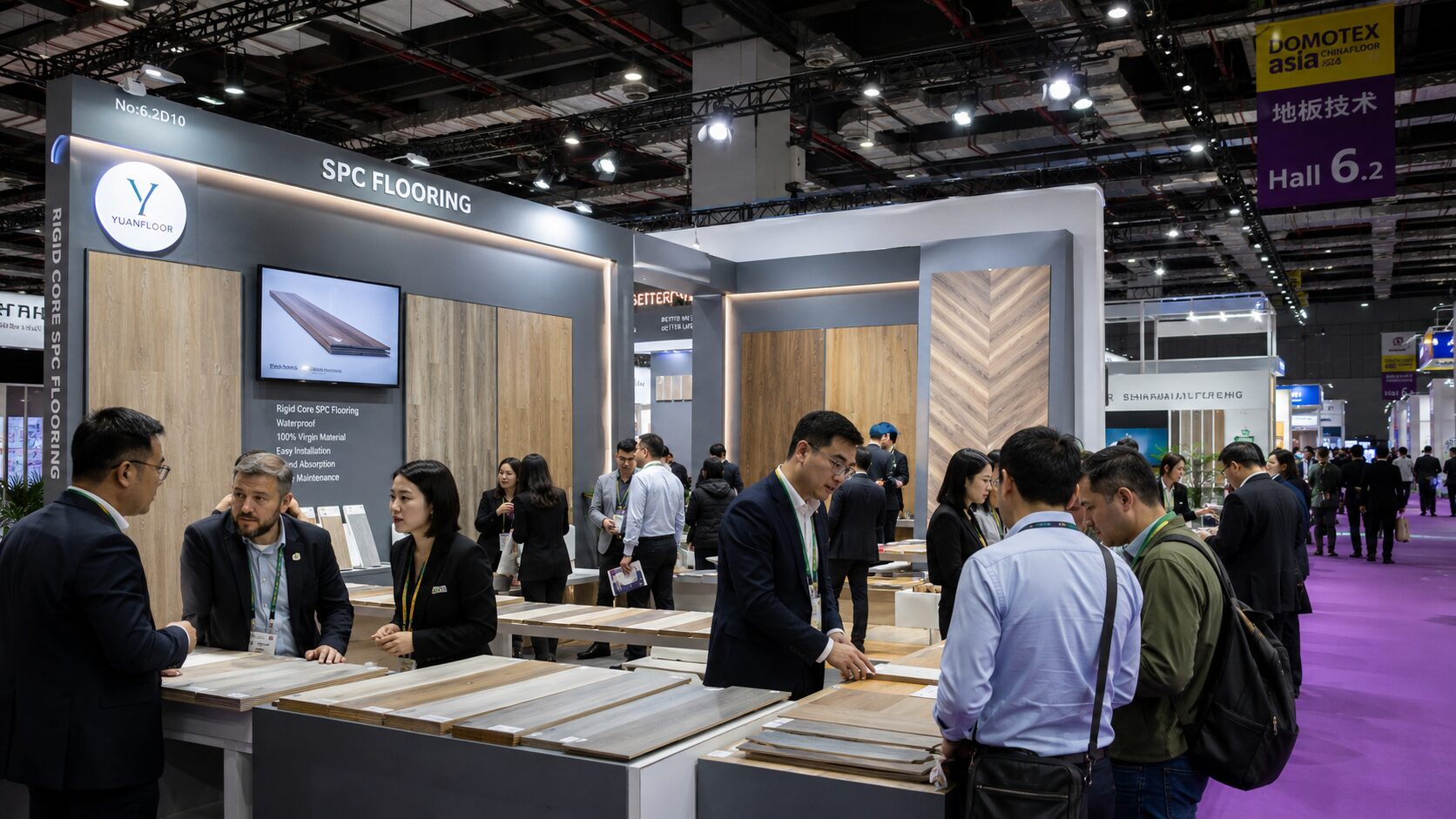
DOMOTEX Asia 2026 Shows Quality Is Becoming the New Battleground
The Facts
According to official DOMOTEX asia/CHINAFLOOR announcements, the exhibition welcomed thousands of flooring professionals from around the world between May 27 and May 29 in Shanghai. SPC flooring, LVT flooring, digital printing technologies, and sustainable materials dominated many product launches.
Factory Reality Check
Walking through exhibition halls, one thing became obvious.
Buyers are asking different questions compared with previous years.
Three years ago, most discussions focused on container price.
Last week, most conversations focused on:
- SPC core density
- Click-lock durability
- Virgin material ratio
- Wear layer thickness
- Environmental compliance
That tells us the flooring market is entering a more mature stage.
Many distributors experienced customer complaints from low-cost SPC flooring during the past two years. Flooring that looked good in the showroom sometimes failed after exposure to heat, humidity, or heavy traffic.
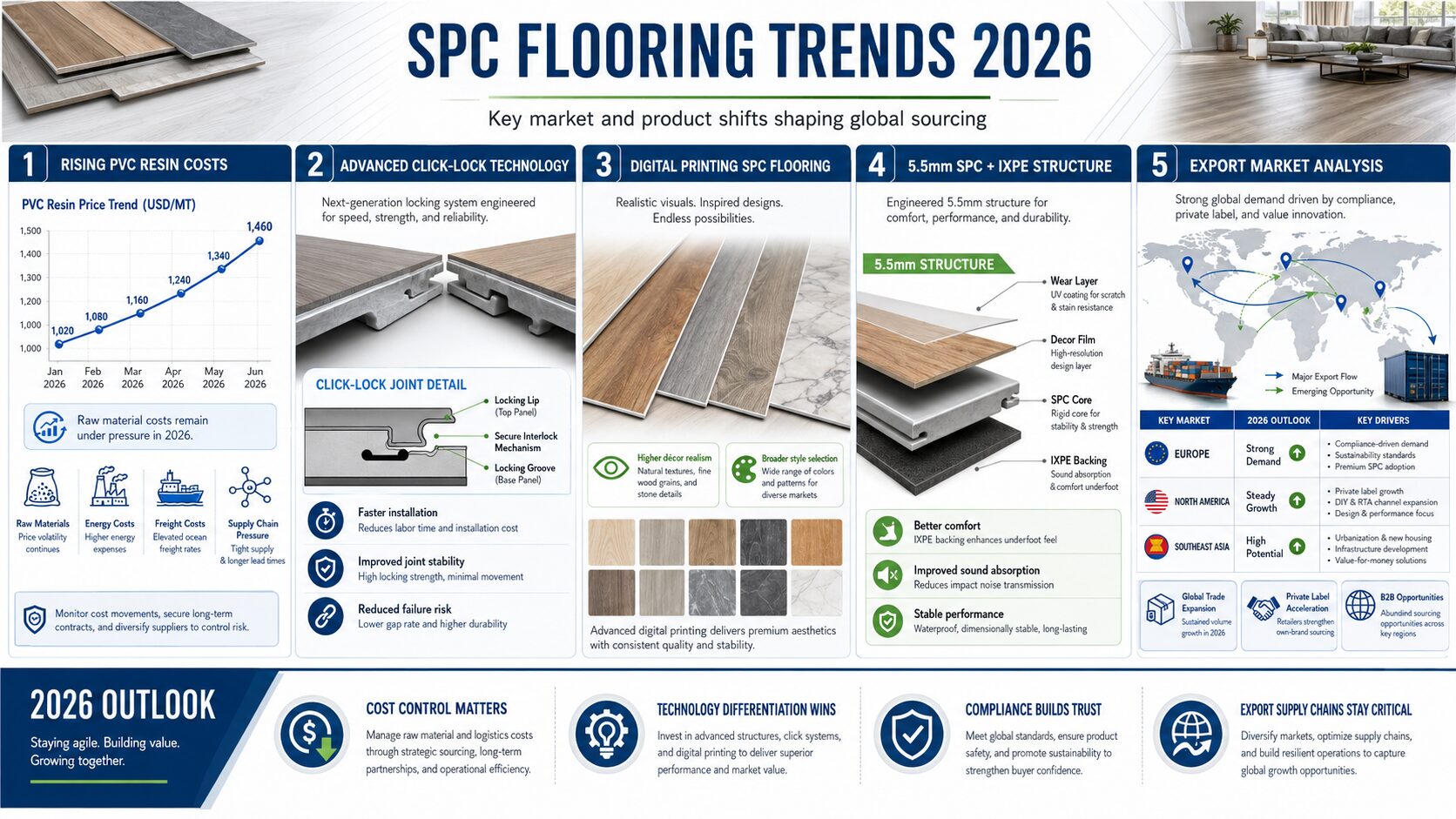
Inside Zhangjiagang, several factories reported stronger demand for 5.5mm SPC with 1.5mm IXPE compared with thinner 3.5mm and 4.0mm products.
The reason is simple.
Warranty claims cost more than paying an extra USD 0.30 per square meter.
A flooring board may look identical in a catalog.
Its long-term performance may be completely different.
Factories focused on stable production processes and quality control are receiving more serious inquiries than suppliers competing only on low prices.
For distributors planning long-term growth, premium SPC flooring is becoming easier to sell than low-cost flooring that generates complaints.
Buyer’s Direct Action Plan
- Verify SPC density above 2000kg/m³.
- Require click-lock testing reports.
- Inspect actual production facilities.
- Compare warranty history between suppliers.
- Avoid sourcing decisions based only on FOB pricing.
PVC Resin Costs Continue Moving Higher
The Facts
PVC resin markets remained volatile throughout May. Industry analysts reported continued pressure on resin pricing due to supply-demand fluctuations and petrochemical market uncertainty.
Factory Reality Check
Raw material costs affect every SPC flooring manufacturer.
When PVC prices increase, factories generally have three options:
- Increase selling prices.
- Accept lower profit margins.
- Modify product formulations.
Most buyers focus only on option one.
Experienced buyers pay attention to option three.
Inside the industry, some manufacturers react to rising costs by:
- Increasing recycled powder content.
- Lowering SPC density.
- Reducing UV coating thickness.
- Shortening cooling and aging times.
None of these changes appear on a quotation sheet.
Yet all of them directly affect flooring performance.
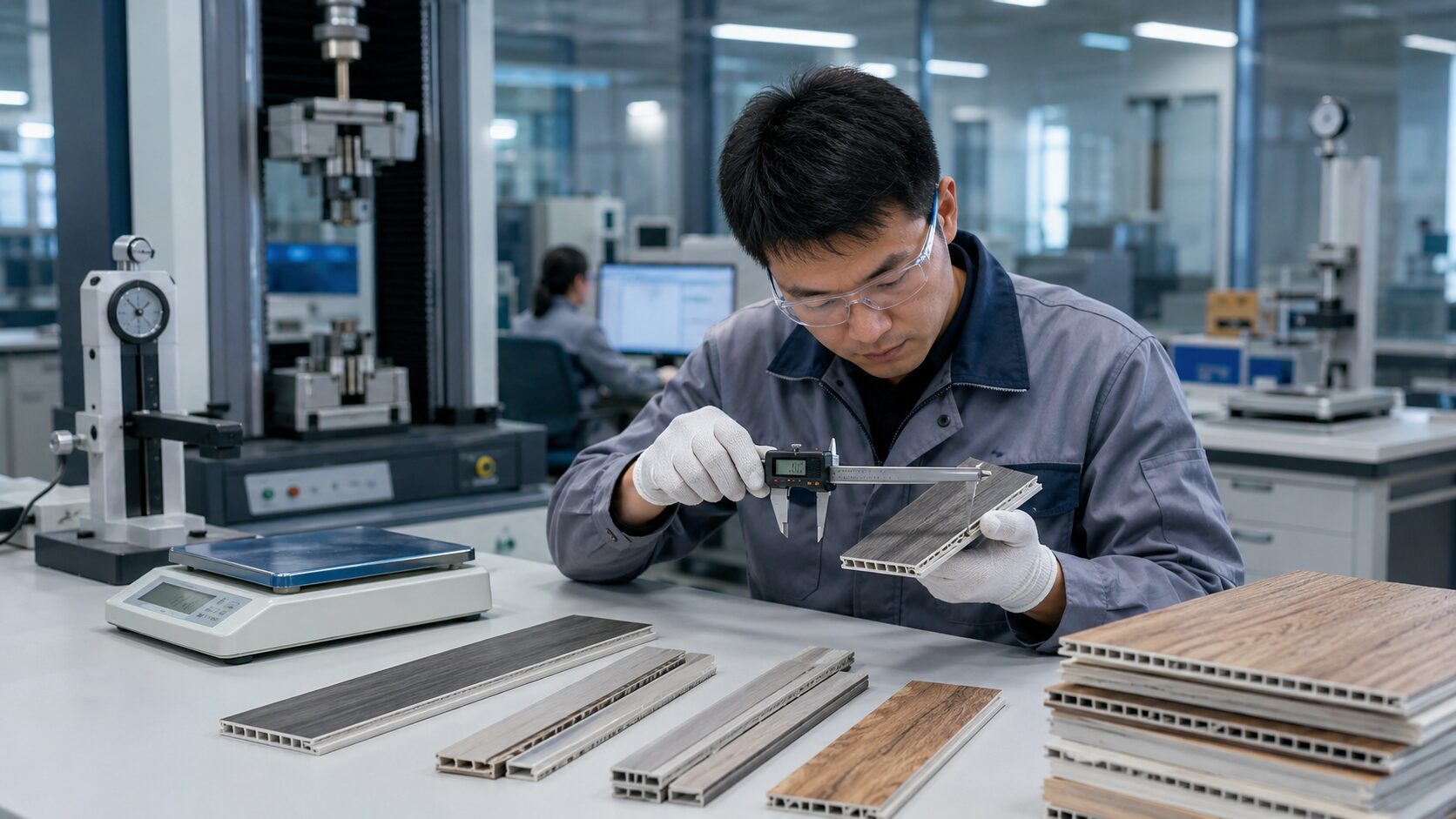
For example, a 5.5mm SPC board manufactured with proper virgin resin and sufficient cooling time performs very differently from a similar-looking board made with aggressive cost reductions.
Several export factories in East China reported longer quotation approval cycles because buyers are requesting additional technical documentation before confirming orders.
This trend is likely to continue throughout summer.
Buyer’s Direct Action Plan
- Lock material specifications into contracts.
- Require third-party density testing.
- Verify wear layer thickness independently.
- Request production batch records.
- Conduct loading inspections before shipment.
Locking System Technology Becomes a Competitive Advantage
The Facts
Several flooring technology companies announced expanded adoption of advanced click-lock systems and edge technologies during the exhibition period. Manufacturers continue investing in stronger locking profiles and faster installation systems.
Factory Reality Check
Most end users never see the importance of click-lock engineering.
Distributors learn very quickly.
Flooring complaints are rarely caused by décor design.
They are frequently caused by:
- Broken locking edges.
- Installation failures.
- Temperature expansion issues.
- Weak profile machining.
Inside the factory, the click-lock profile is one of the most demanding production stages.
Precision differences measured in fractions of a millimeter determine whether flooring survives years of use.
This week reinforced a growing industry reality:
Strong click systems are becoming more important than decorative appearance.
Digital printing technology continues improving.
Decor films continue becoming more realistic.
But buyers increasingly understand that appearance alone does not guarantee performance.
A premium locking system reduces installation problems, improves customer satisfaction, and lowers warranty costs.
That is why advanced click technology remains one of the most discussed topics in the flooring industry.
Buyer’s Direct Action Plan
- Request click-cycle testing reports.
- Inspect locking profile quality.
- Perform installation testing before shipment.
- Verify bevel consistency.
- Include click performance requirements in contracts.
Key Data Points
| Data Point | Current Market Situation |
|---|---|
| DOMOTEX Asia 2026 | May 27–29 |
| Recommended SPC Density | ≥2000kg/m³ |
| Popular Residential Specification | 4.2mm / 0.3mm |
| Popular Commercial Specification | 5.5mm + 1.5mm IXPE |
| Recommended Wear Layer | 20 mil |
| Major Buyer Focus | Quality & Compliance |
| Main Technology Trend | Advanced Click Systems |
| Production Risk | Excessive Recycled Material |
| Fast-Growing Category | Digital Printing SPC Flooring |
| Market Direction | Quality Over Price |
Buyer FAQ
Why are distributors becoming more cautious about low-cost SPC flooring?
Because warranty claims often cost more than the savings achieved through lower purchase prices. Buyers increasingly focus on long-term performance instead of initial cost.
Is 5.5mm SPC still the safest choice for most export markets?
Yes. For many residential and light-commercial projects, 5.5mm SPC combined with 1.5mm IXPE provides a strong balance between stability, comfort, and durability.
What should buyers verify before placing June orders?
Density reports, wear-layer thickness, click-lock performance, raw-material composition, and production consistency should all be verified before confirming container production.
Published by AutoPP Floor
Contact Team:
https://autoppfloor.com/contact-us/