China Flooring News: LVT Is Moving From “Pretty Surface” to Real Project Material
Published: June 22, 2026 | autoppfloor.com | Zhangjiagang, Jiangsu, China
Category: Flooring Industry News
Editor’s Desk: AutoPP Floor Export Intelligence
Market Brief
The flooring news flow this week is not loud, but it is useful.
LVT is showing up in real renovation stories, resilient flooring leaders are saying the category has moved far beyond the old “cheap vinyl” image, and PVC prices are giving buyers a short negotiation window. But from the factory side, the message is not “buy cheaper now.”
The real message is this: importers should use the current price softness to upgrade structure, not to chase the lowest quotation.
A weak 3.5mm board is still weak even when PVC resin drops. A good 5.5mm + 1.5mm IXPE SPC still needs density control, click precision, UV coating and batch discipline. A dry back LVT still needs subfloor logic, wear layer accuracy and color consistency.
This is the practical side of China flooring export 2026.
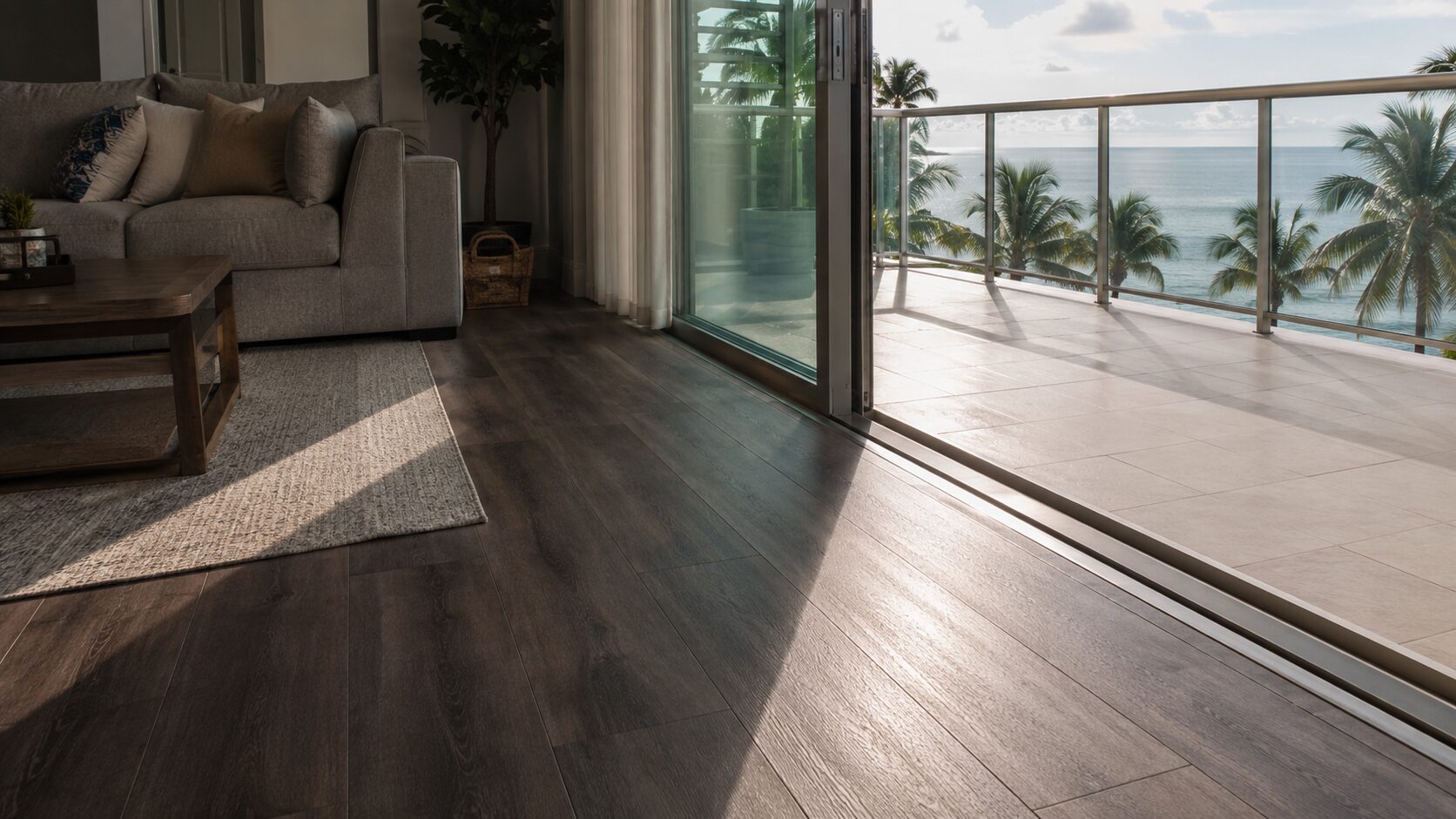
What Happened This Week
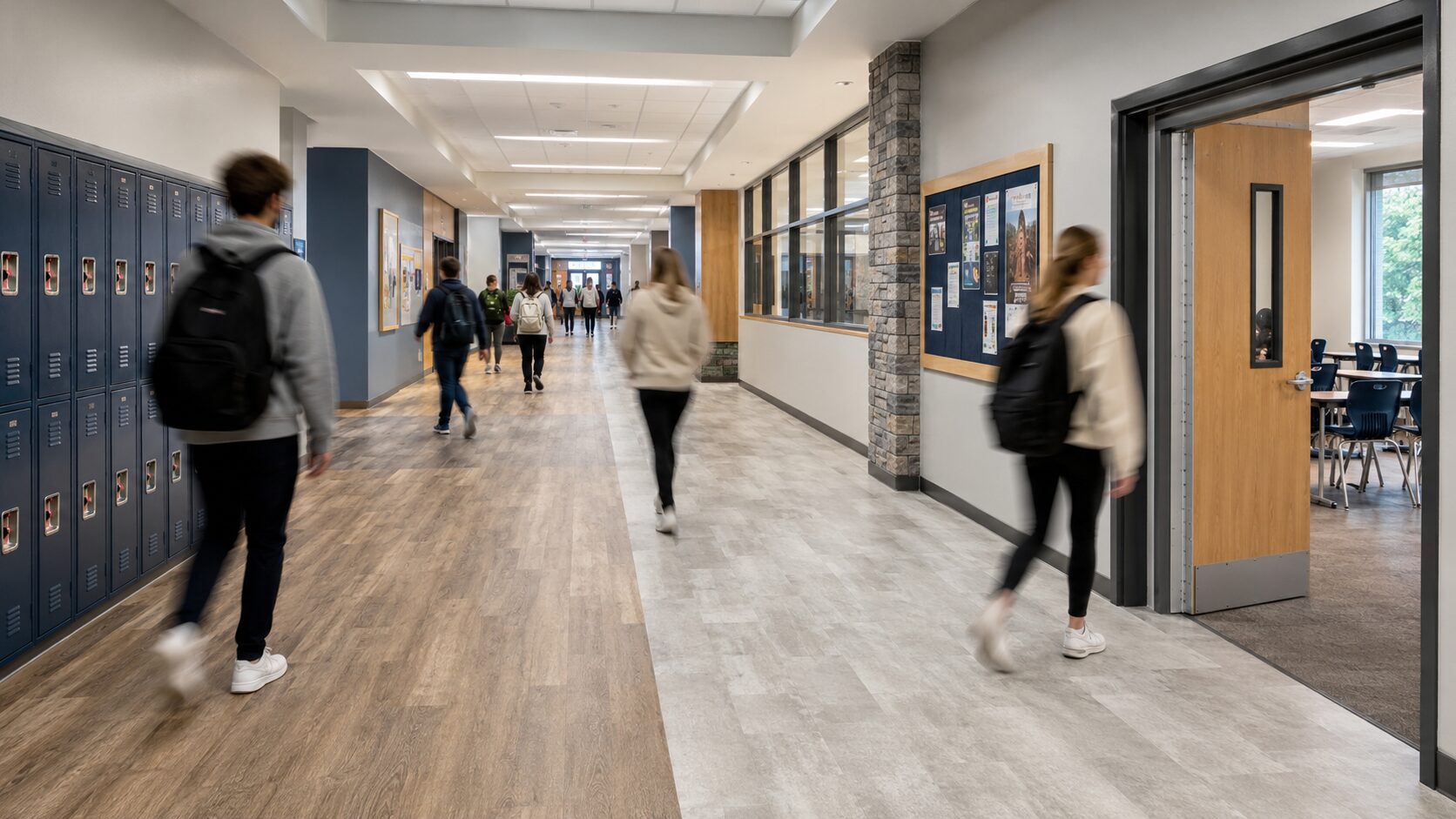
A recent U.S. school renovation story showed luxury vinyl flooring being used across classrooms, hallways, student spaces, chapel areas and multipurpose zones after major hurricane damage. For flooring people, this is more than a local project report. It shows why LVT keeps winning in real buildings: color range, specification flexibility, clean maintenance and good fit for high-traffic education spaces.
At the same time, industry interviews continue to frame resilient flooring as a design and performance leader, not only a low-cost alternative. That is a major change. LVT, SPC and WPC used to sit in the market as “value options.” Now they sit in the middle of design, renovation, retail replacement and commercial project work.
PVC market data also shows a softer short-term cost environment. Polyvinyl traded around 4,617 CNY/T on June 19, 2026, with the benchmark down more than 7% over one month. That matters to SPC and LVT factories because PVC resin is one of the main cost drivers.
But do not read the price chart like a beginner.
Lower resin price helps cost.
It does not automatically improve quality.
Factory Reading: Why LVT Keeps Showing Up in Schools, Retail and Public Buildings
When a school chooses LVT after a large rebuild, the reason is usually not one single selling point.
It is a mix of practical needs.
The floor must handle students, chairs, carts, cleaning, humidity, foot traffic and fast maintenance. It also needs enough design flexibility to separate classrooms, corridors, common areas and public rooms without turning the whole project into a patchwork mess.
This is exactly where LVT performs well.
For controlled subfloors and large project spaces, LVT Dry Back Glue Down Flooring can still be one of the most rational products in the resilient family. It does not get as much social media attention as click SPC, but in commercial renovation, dry back LVT is easy to maintain, easy to replace by area and suitable for large continuous spaces.
Retail buyers often underestimate this.
They see SPC selling well in DIY channels, then assume SPC should be used everywhere. That is lazy product thinking.
SPC is strong when floating installation, waterproof marketing, dimensional stability and fast retail sales matter. Dry back LVT is strong when the subfloor is prepared, the area is large, and replacement control matters. LVT click is useful when the buyer wants faster installation but does not want a full rigid core program.
That is why importers should not ask only for one price sheet. They should ask for a product map.
A serious supplier should help buyers compare SPC Flooring, dry back LVT, Waterproof LVT Click Vinyl Flooring and other project products under one structure.
The Hidden Trap: Softer PVC Price Can Create Worse Flooring
This sounds strange, but it happens.
When PVC prices fall, some buyers push factories too hard. They think the factory now has enough margin to cut another 5%, then another 8%, then another 10%.
The factory still needs to survive.
So the hidden changes begin.
The easiest places to hide cost reduction are inside the product:
The SPC core becomes lighter.
The actual wear layer becomes thinner.
The UV coating gets reduced.
The IXPE backing uses lower density foam.
The board gets profiled too soon after extrusion.
The carton weight drops.
The pallet becomes weaker.
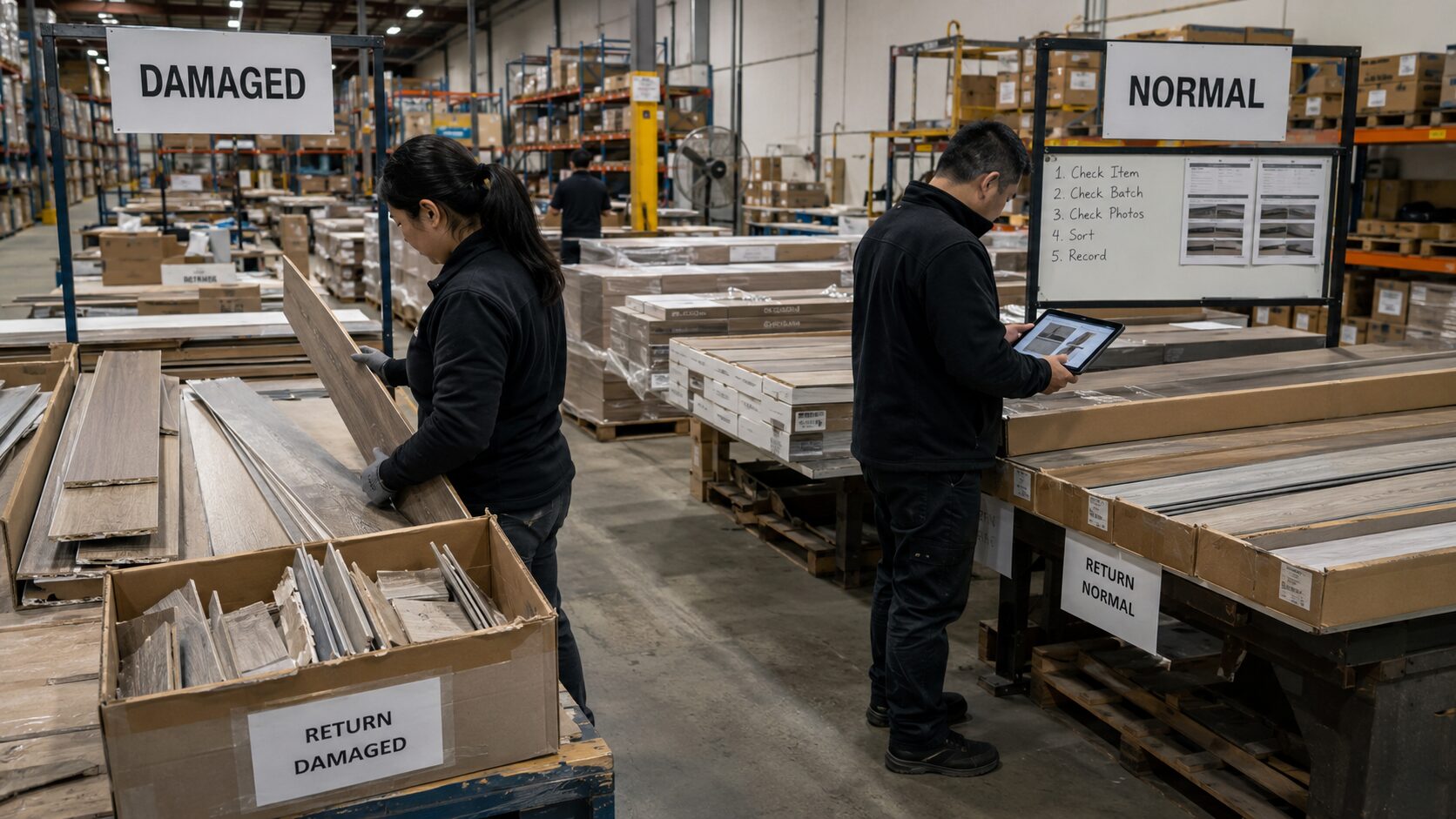
A buyer may not see these changes in one showroom sample.
But the market will see them after installation.
For a 4.2mm/0.3mm SPC board, core density and click profile are already close to the practical lower line for serious residential distribution. If a factory cuts too much from that structure, the first failure is usually the locking edge. For 5.5mm + 1.5mm IXPE, the product has more selling value, but only if the IXPE quality is real and the board is not overloaded with unstable recycled filler.
That is why buying SPC flooring from China requires factory discipline.
A low PVC price is a chance to upgrade the purchase order.
It is not a reason to buy blind.
Importers can review the broader AutoPP Floor PVC flooring products to decide which structure fits each market instead of forcing every buyer into the same SPC quotation.
Retail Reality: Resilient Flooring Is Now a Design Category
Old vinyl sold because it was practical.
Modern resilient flooring sells because it is practical and good-looking.
That difference changed the whole category.
Today, a retailer needs warm oak, stone looks, muted beige, wide plank, matte surface, low-repeat patterns, EIR texture and better room photography. Digital printing SPC flooring is growing because buyers want more realistic visual control and faster décor development.
But design upgrades also create new factory pressure.
A plain oak décor is easy.
A low-repeat digital pattern with synchronized texture is not easy.
If the film is unstable, the board looks cheap. If the UV coating is uneven, the surface gloss shifts from carton to carton. If the click profile is weak, the beautiful design becomes a warranty claim.
For importers, the correct question is not “Can you copy this color?”
The correct question is:
Can you repeat this color for 5 containers?
Can you control gloss from batch to batch?
Can you hold plank size tolerance?
Can you protect the click edge during packaging?
Can you keep the same backing density in repeat orders?
A good floor is not one lucky sample.
A good floor is repeatable production.
This is why AutoPP Floor keeps product discussions tied to structure, production control and export use case, not only surface design.
Application Logic: Stop Selling One Floor to Every Space
This is where many importers lose money.
They use one product for every market.
That usually creates claims.
A rental apartment does not need the same structure as a luxury retail store. A garage does not need the same floor as a bedroom. A humid coastal apartment does not behave like a dry inland showroom. A school corridor does not wear like a private living room.
The buyer’s job is to match the floor to the use area.
For residential retail, 4.2mm/0.3mm SPC can still work if density, click precision and UV coating are controlled. For stronger mid-range programs, 5.0mm/0.5mm or 5.5mm + 1.5mm IXPE gives better customer confidence. For large commercial areas with prepared subfloors, dry back LVT deserves serious attention. For quick renovation and lighter retail installation, LVT click can be a clean option. For garage, storage and workshop areas, Interlocking Garage Floor Tiles may be the more honest product.
This is also the practical WPC vs SPC comparison.
WPC feels softer and more forgiving. SPC is stronger in dimensional stability when made properly. LVT is still highly useful in project work. Garage tiles solve impact and modular replacement problems that SPC was never designed to solve.
Do not sell by trend.
Sell by jobsite.
Buyer Control Sheet for July Orders
Before sending a deposit, importers should write the following into the purchase order:
| Control Point | Minimum Question to Ask |
|---|---|
| Thickness | Is it actual measured thickness or nominal catalog thickness? |
| Wear layer | What is the tolerance after real measurement? |
| SPC density | Is the core above the agreed density range? |
| Material formula | Virgin, mixed or recycled-heavy core? |
| Click system | Which profile, what tolerance, what test result? |
| IXPE backing | Thickness only, or thickness plus density? |
| UV coating | How many coating passes and what abrasion target? |
| Color batch | How will repeat-order color difference be controlled? |
| Packaging | Can the carton and pallet survive export handling? |
| Compliance | Do reports match the exact product being shipped? |
A factory that knows its process can answer these questions.
A trader will usually change the subject.
Old Factory Comment
This week’s news is not telling us that SPC is dying or LVT is suddenly replacing everything.
That is not how the flooring market works.
The real shift is more practical: resilient flooring is becoming more segmented.
SPC is still strong.
LVT is still growing in project work.
Click products are still powerful in renovation.
Dry back still makes sense in commercial spaces.
Garage tiles still solve a very specific problem.
The market is not asking for one miracle product.
It is asking for fewer mistakes.
For China flooring export 2026, the winning suppliers will not be the cheapest factories. They will be the factories that can recommend the right structure, keep batch quality stable, and explain the product honestly.
Buyers who want to evaluate AutoPP Floor’s production background can read the factory introduction first. For quotations, send target country, room type, thickness, wear layer, backing, expected volume and certification needs through the AutoPP Floor contact page.
Published by AutoPP Floor | Zhangjiagang, Jiangsu, China