Updated September 12, 2026 | Technical review by AutoPP Floor, Zhangjiagang, China
Peel-and-stick vinyl flooring thickness should match the use, subfloor condition, traffic, adhesive strength, and expected service life. A thicker tile is not automatically better: wear layer, adhesive, dimensional stability, and release liner must be checked separately. This guide explains how to compare quotations and prevent corner lift, shrinkage, wear, and adhesive transfer.
Quick Answer: What Thickness Should You Choose?
The following values are purchasing targets, not universal limits.
| Application | Recommended Total Thickness | Recommended Wear Layer | Purchasing Comment |
|---|---|---|---|
| Temporary display or short-term decoration | 1.0-1.2 mm | 0.07 mm | Prioritize low cost and clean removal. |
| Bedroom or light rental renovation | 1.5 mm | 0.10 mm | Suitable only on a smooth and stable base. |
| Kitchen, corridor, or home office | 1.8-2.0 mm | 0.15-0.20 mm | Provides a stronger handling and wear margin. |
| Light commercial project | 2.0-3.0 mm | 0.20-0.30 mm | Confirm rolling-load and maintenance conditions. |
| Heavy commercial traffic | Project-specific LVT or SPC | 0.50 mm or project-specific | Self-adhesive construction may not be the best system. |
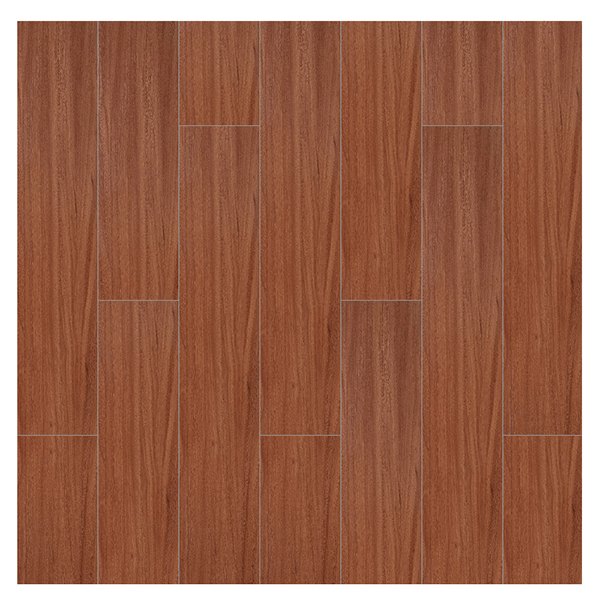
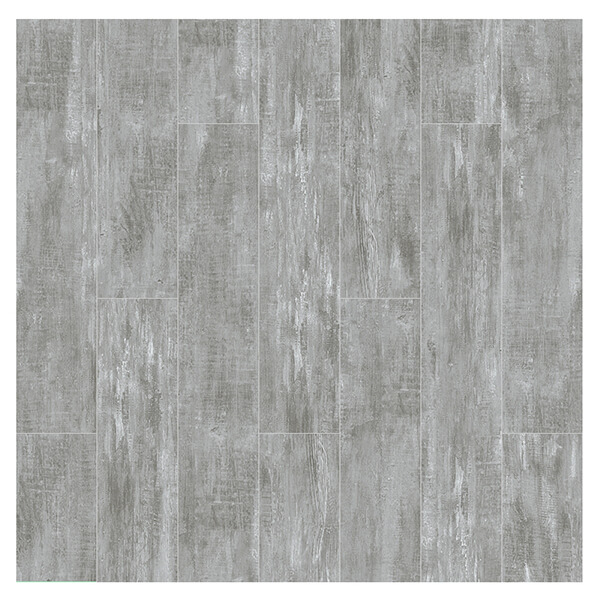
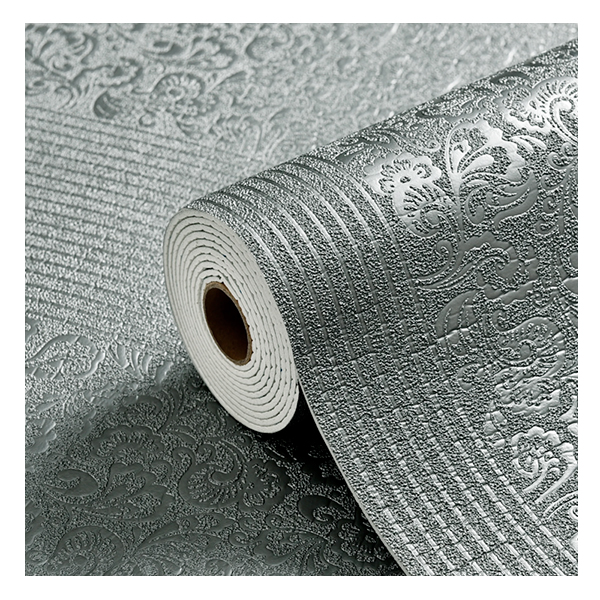
The AutoPP peel and stick flooring range includes wood, stone, and textile designs. It suits home renovations, light commercial use, temporary retail displays, and other low-profile installation projects.
What Does the Advertised Thickness Include?
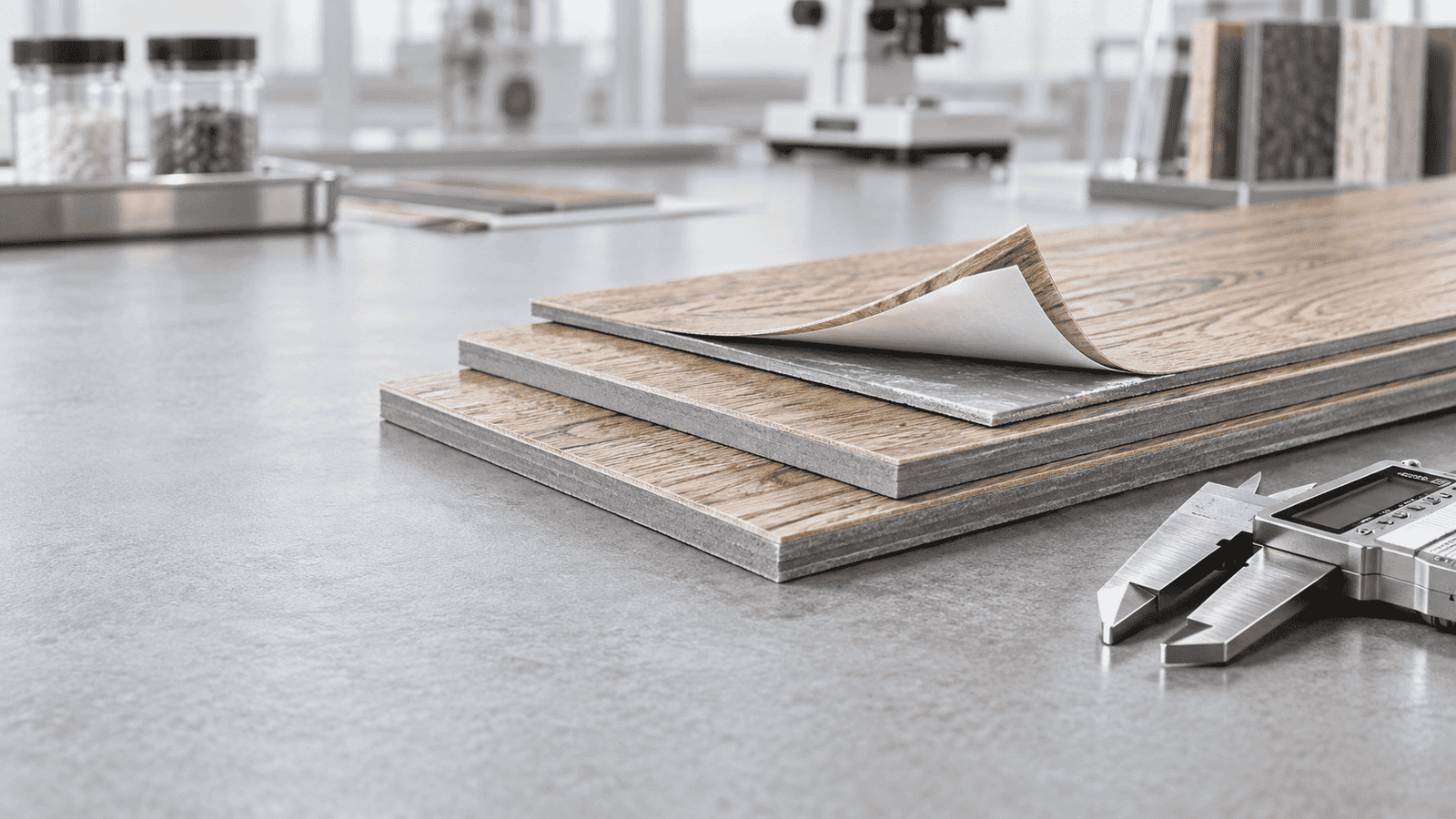
The advertised total may include the surface coating, wear layer, decorative film, PVC base, and adhesive. The removable liner is normally excluded because it is not part of the installed floor.
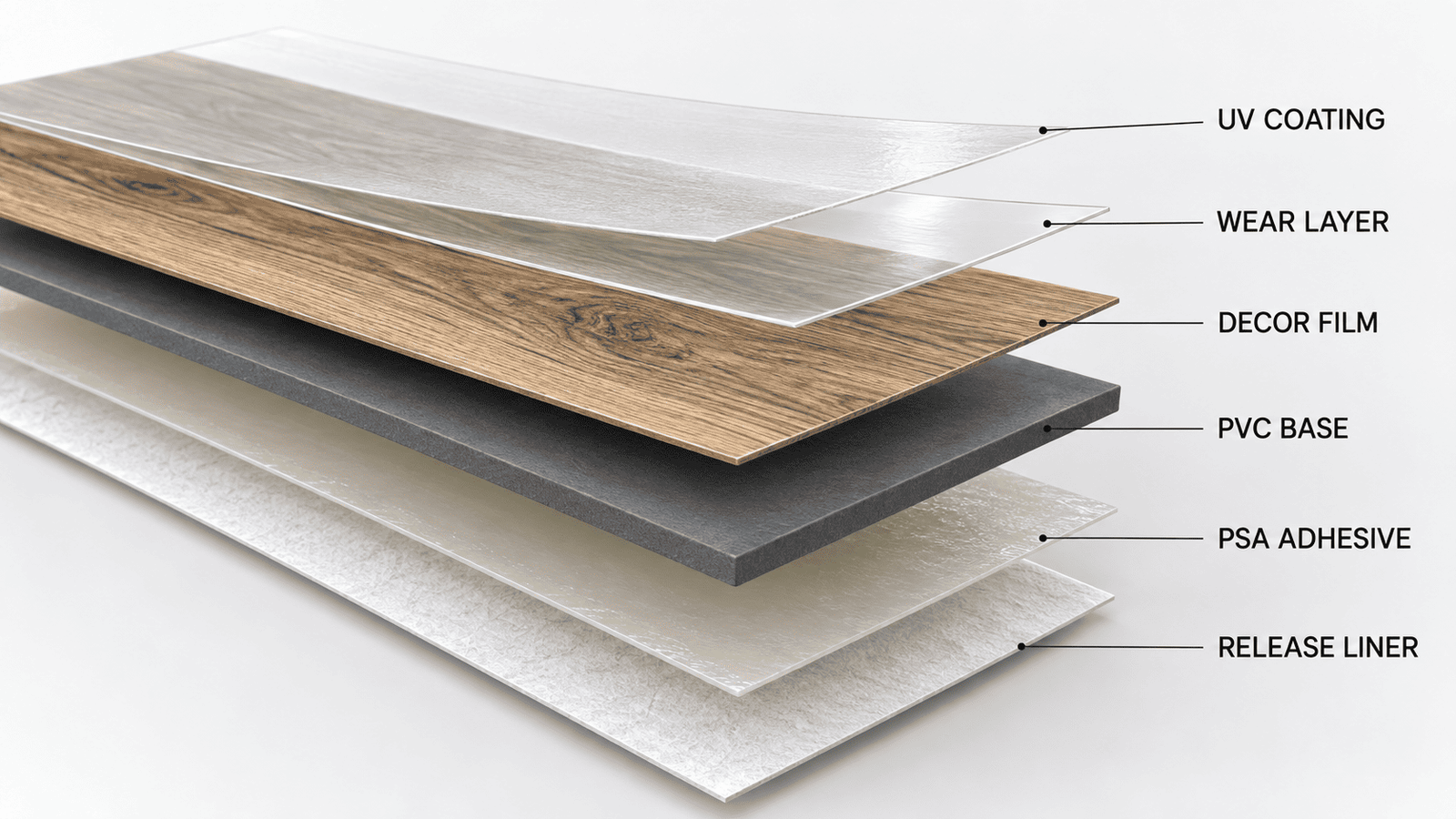
| Layer | Primary Function | Buyer Verification Point |
|---|---|---|
| UV coating | Resists stains and supports surface gloss control | Confirm coating consistency and curing. |
| Transparent wear layer | Protects the printed design from abrasion | Measure separately from the UV coating. |
| Decorative film | Provides the wood, stone, or textile visual | Approve color and pattern-repeat samples. |
| PVC base | Provides body, flexibility, and dimensional behavior | Test thickness, stability, and curling. |
| PSA adhesive | Bonds the tile to the prepared subfloor | Record adhesive type and peel-test conditions. |
| Release liner | Protects the adhesive before installation | Check clean removal and adhesive transfer. |
A quotation stating only total thickness is incomplete. Products with the same nominal thickness can use different wear layers, adhesives, PVC formulations, and tolerances.
Total Thickness and Wear Layer Are Different Specifications
Total thickness affects handling, flexibility, telegraphing, and floor height. The wear layer protects the decorative print under traffic and cleaning.
| Comparison Item | Light-Duty Construction | Regular Residential Construction | Why It Matters |
|---|---|---|---|
| Total thickness | 1.2 mm | 2.0 mm | A thicker body is less likely to reveal minor surface texture. |
| Wear layer | 0.07 mm | 0.20 mm | The verified transparent layer protects the printed film. |
| Recommended use | Temporary or low-traffic | Regular residential | Application should be agreed before price comparison. |
| Main inspection focus | Curling and adhesive | Wear, adhesive, and stability | Thickness alone cannot predict service life. |
Do not add the UV coating to the transparent film measurement. Request a cross-section reading or calibrated micrometer report.
How to Select Peel and Stick Vinyl Flooring
Match the Construction to Real Traffic
Room labels are not enough. A bedroom and kitchen have different traffic, chair movement, cleaning, and moisture exposure. Define the actual use before approving the construction.
For entrances, shops, or frequent rolling loads, compare the product with SPC rigid-core flooring or contract-grade glued LVT. Self-adhesive PVC is a fast-renovation solution, not a universal replacement for rigid flooring.
Inspect the Subfloor Before Ordering
Flexible vinyl follows the surface underneath it. Grout lines, screw heads, board joints, ridges, and repaired cracks can become visible. Extra thickness may reduce minor telegraphing but cannot repair an unstable base.
The surface must be clean, dry, smooth, stable, and free from wax, oil, dust, loose paint, and cement powder. Fill and level deep joints before installation.
Control Heat Exposure and Dimensional Stability
Temperature changes, direct sunlight, hot windows, and container storage can expose weak formulations or incomplete conditioning.
ISO 23999:2025 covers dimensional stability and curling after heat exposure and reconditioning. State the method, conditioning, and acceptance value in the purchase order.
| Dimensional Control Item | Recommended Purchasing Target | Documentation Required |
|---|---|---|
| Dimensional change after heat | ≤0.15% | Test method and actual result |
| Visible corner lift after conditioning | None | Conditioned sample inspection |
| Suggested installation temperature | 18-28°C | Product installation instruction |
| Subfloor flatness | ≤2 mm over 2 m | Site inspection record |
| Surface gloss for natural matte designs | 6-10 GU | Gloss-meter reading |
How to Verify Adhesive Performance
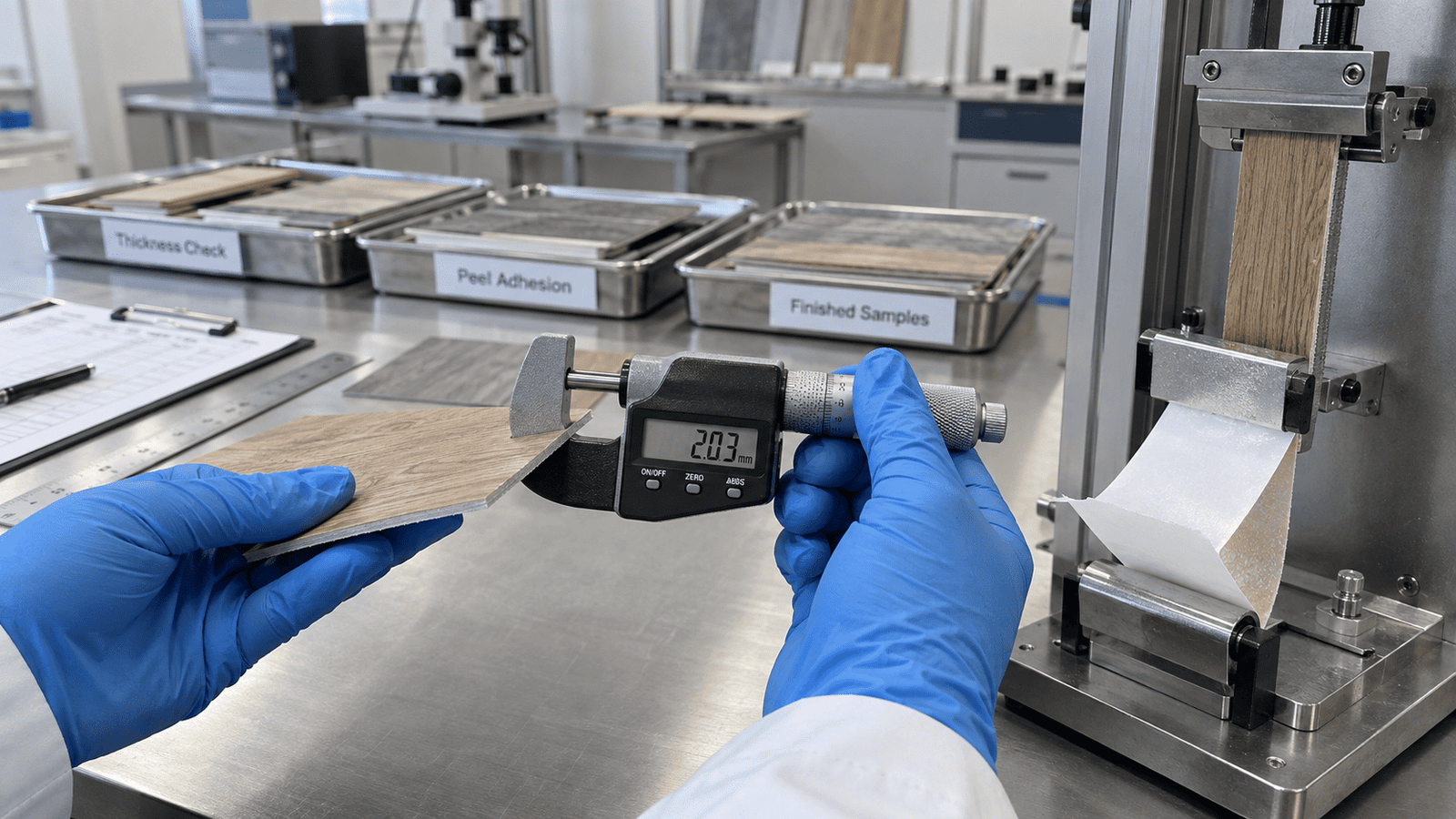
Thickness cannot compensate for weak adhesive. Most failures begin at a corner or short edge; once dust enters, the effective bonding area decreases.
ASTM D3330/D3330M describes peel-adhesion methods for pressure-sensitive tapes. It can check adhesive consistency but is not a complete flooring-performance standard. Also test finished samples on representative substrates.
| Adhesive Test Item | Recommended Control | Information That Must Be Recorded |
|---|---|---|
| Acrylic PSA coating weight | 80-120 g/m² | Average, minimum, and sampling locations |
| Factory peel target after conditioning | >10 N/25 mm | Substrate, angle, speed, dwell time, and temperature |
| Conditioning period before evaluation | 24 hours | Start and finish time |
| Peel-test angle | 180° | Test configuration and equipment |
| Release-liner basis weight | 80-100 gsm | Supplier batch and incoming inspection |
These figures are factory purchasing targets. They are not substitutes for the buyer’s local standard, installation specification, or laboratory acceptance criteria.
Five Failure Checks Before Approving Production
Check the Layer Total
Compare the declared layers with the nominal total. A large unexplained difference may indicate that nominal and measured values are being mixed.
Identify the Real Wear Layer
Separate the transparent wear film from the UV coating. Approve a measurement rather than “heavy duty” wording.
Inspect Every Corner After Conditioning
Install samples on the intended substrate and inspect every corner after conditioning. Immediate tack proves only initial adhesion.
Test the Release Liner
Reject liners showing torn paper, glue strings, dry areas, uneven coating, or adhesive transfer. Persistent odor requires a review of drying, plasticizer, ink, UV curing, and packing.
Evaluate Production Packing
Test sealed production cartons, not only showroom samples. Warm-packed flooring can develop pressure marks, liner imprinting, or corner memory.
Buyer FAQ
Is thin peel and stick vinyl flooring suitable for permanent renovation?
It can work in low traffic on a smooth, dry, stable base. For regular residential use, follow the quick-reference table and verify adhesive and stability results.
Can a thicker tile hide ceramic grout lines?
It may reduce minor telegraphing, but it cannot permanently hide deep joints. Fill and level the grout lines before installation.
Is a thicker wear layer always better?
A thicker verified wear layer offers more surface protection but cannot correct unstable PVC, weak adhesive, poor curing, or unsuitable installation.
Why do self-adhesive tiles lift at the corners?
Typical causes include dust, moisture, old wax, insufficient adhesive, uneven coating, low installation temperature, premature traffic, or incomplete factory conditioning.
Is peel and stick vinyl flooring waterproof?
The PVC material resists water, but the completed floor is not automatically a waterproof installation. Water can enter through joints and reach the adhesive or subfloor. Wet-area use requires suitable substrate preparation and edge treatment.
What should be written into a purchase contract?
State the construction, tolerances, methods, conditioning, approved samples, packing, compliance documents, and retained samples. Do not approve from price per square metre alone.
Factory Conclusion
The correct peel and stick vinyl flooring thickness is the construction that matches the application and passes documented checks for wear layer, adhesive, dimensional stability, liner release, and packing condition. Thickness is only one part of that decision.
AutoPP Floor is based in Zhangjiagang, Jiangsu, within China’s resilient-flooring production and export supply chain. Buyers can review self-adhesive PVC flooring, compare it with SPC flooring, or submit project requirements through AutoPP Floor.
References and Sources
- ISO 23999:2025 — Dimensional stability and curling of resilient floor coverings
- ASTM D3330/D3330M — Peel adhesion of pressure-sensitive tape
- AutoPP Floor — Peel and Stick Flooring
- AutoPP Floor — SPC Flooring
*Method note: The specification ranges in this article are factory purchasing recommendations. They do not replace project-specific standards, laboratory reports, installation instructions, or contractual tolerances.